 How to Get Rid of Muscle Knots (And Why They Come Back)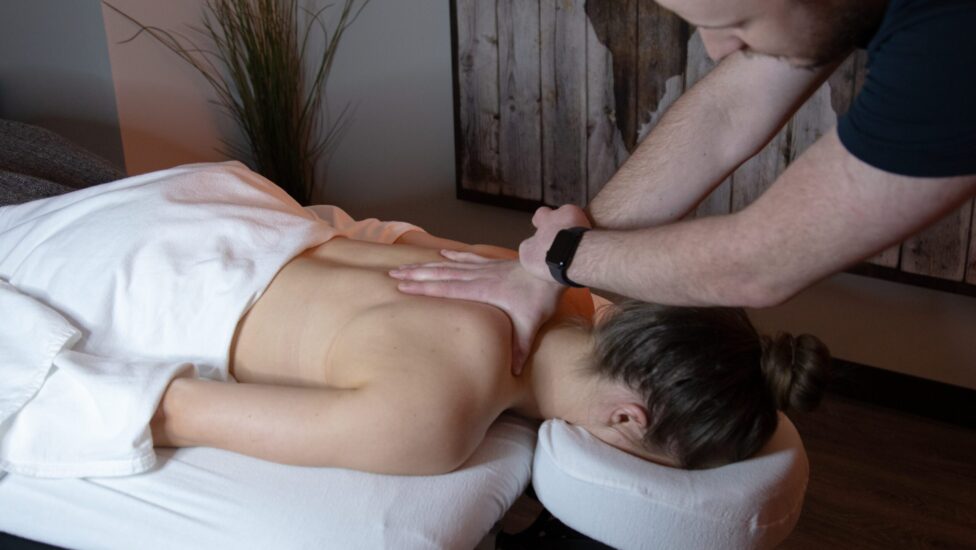
Almost everyone has experienced this before.
That spot in your upper back that always feels tight. The area between your shoulder blades that feels like a “ball.” The knot in your neck that keeps coming back no matter how much you stretch it.
We usually call these spots muscle knots, and the most common assumption about them is that they’re a small, local fault—a bit of muscle that has seized up and needs to be pressed out. That assumption is worth questioning, because it’s the reason so many people feel stuck in a loop of temporary relief followed by the same tension a week later.
Here’s the idea that reframes everything: a muscle knot is usually an output, not an isolated problem. It’s your body responding to how it’s being loaded: your posture, your workload, your stress, and how much you move and recover across a day.
Once you see a knot as the symptom of a pattern rather than a random glitch in one muscle, the frustrating parts finally start to make sense: why it keeps returning, why massage helps but rarely “fixes” it for good, and why pushing harder often makes things worse instead of better.
What Do People Actually Mean by Muscle Knots?
The term muscle knot isn’t necessarily a formal medical diagnosis, but it’s commonly used to describe areas of:
- Increased muscle tension
- Sensitivity
- Tightness
- Tenderness
- Restriction
Sometimes these areas are referred to as trigger points, which are localized areas within muscle tissue that may feel irritated or sensitive when pressure is applied. People often describe muscle knots as:
- A hard or tight spot
- A “ball” in the muscle
- A constant area of tension
- Something that feels sore when pressed on
Common areas include:
- Upper traps and neck
- Between the shoulder blades
- Low back
- Glutes and hips
- Forearms
- Calves
Why Do Muscle Knots Happen?
One of the biggest misconceptions is that knots simply appear randomly. Usually, muscle knots develop because certain tissues are handling more stress or workload than they’re designed for over time. The body adapts to what it does repeatedly. That can include:
- Sitting for long periods
- Repetitive lifting
- Physically demanding work
- Stress and tension
- Training volume
- Poor recovery
- Limited movement variability
Studies on office and computer workers have repeatedly linked sustained, low-level muscle activity (the kind you hold while typing or staring at a screen for hours) to the development of trigger points in the upper trapezius. The problem isn’t a single big strain; it’s the constant, low hum of a muscle that never gets to fully switch off.
One finding stands out. When researchers compared workers with and without neck and shoulder pain, the pain-free group tended to switch between activity levels more often through the day, giving their muscles frequent micro-rests. The people with pain held longer, uninterrupted contractions. In other words, it wasn’t just how hard they worked; it was how rarely the muscle got a break.
So a knot isn’t the muscle malfunctioning. It’s the muscle doing exactly what you’ve been asking it to do. And if that’s true, it explains the single most frustrating thing about them.
Muscle Knots Are Often A Symptom, Not The Root Issue
This is the important part. The knot itself is not always the primary problem. Very often, muscle knots are the body’s response to:
- Repetitive movement patterns
- Compensation patterns
- Areas not moving well
- Muscles overworking to stabilize or protect other areas
For example:
- Tight upper traps may develop because the upper back isn’t moving well
- Hip tension may develop because certain muscles are compensating during movement
- Neck knots may become worse during periods of stress or prolonged sitting
The body is constantly adapting. So while massage therapy can absolutely help reduce tension in the area, understanding why the knot keeps returning is equally important.
Why Do Muscle Knots Keep Coming Back?
This is probably the most common frustration people have. They get a massage. The knot improves. Then a few days or weeks later, it comes back.
Why? Because after treatment, most people return to the same desk, the same workload, the same stress, and the same movement habits that produced the tension in the first place. The input hasn’t changed, so the output returns.
The research mirrors this exactly. A 2024 Cochrane review found that massage tends to deliver real immediate and short-term relief for neck pain, while its long-term benefits remain unclear. It’s tempting to read that as “massage doesn’t work” – but that’s the wrong takeaway. It works for what it does: it changes how the tissue and nervous system feel right now. What it can’t do on its own is change the daily inputs you go back to afterward.
That distinction is the whole game.
Can You Permanently Get Rid Of Muscle Knots?
There’s rarely a simple “one-time fix.” The goal is usually not just temporarily reducing tension, but helping the body tolerate movement and workload better over time. For some people, knots improve significantly when:
- Movement patterns improve
- Recovery improves
- Stress is managed better
- Strength and mobility improve
- Workload becomes more balanced
For others, ongoing maintenance may still be helpful because their lifestyle consistently places high physical demands on the body. The body tends to fall back into familiar habits and compensation patterns over time. That’s why recurring areas of tension are common.
How Massage Therapy Helps Muscle Knots
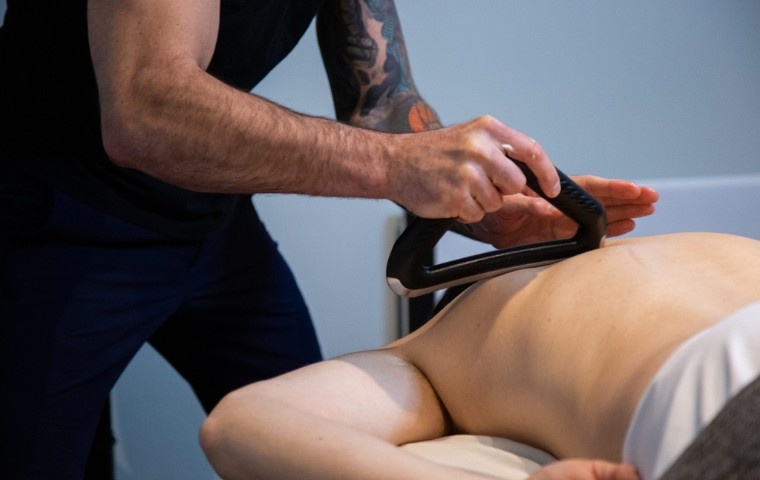
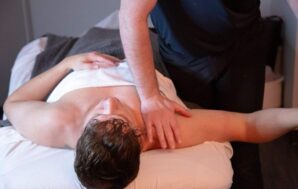
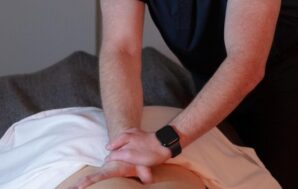
Massage therapy can help in several ways. Treatment may help:
- Reduce muscle tension
- Improve movement comfort
- Increase circulation
- Decrease sensitivity in irritated tissues
- Improve body awareness
- Help the nervous system relax overall
Depending on the person and situation, treatment may also involve:
- Trigger point work
- Deep tissue techniques
- Relaxation-focused treatment
- Mobility-focused approaches
- General Swedish massage techniques
But good treatment should always be individualized.
Deeper Pressure Isn’t Always The Answer
A common belief is:
“If the knot is bad, just push harder.”
But more pressure does not always create better outcomes.
Sometimes aggressive pressure can actually make tissues more irritated or sensitive afterward.
The goal is not simply to “crush” the knot. It’s to help the body respond positively and improve how tissues tolerate stress and movement over time.
In some cases, relaxation-focused treatment may actually help the body release tension more effectively than highly aggressive pressure.
Why Massage And Movement Work Best Together
If knots come from how you load and move, then it follows that the strongest results come from pairing hands-on treatment with changes to that load. The research says the same thing plainly: a 2023 systematic review found that connective-tissue massage combined with exercise outperformed exercise alone for neck pain.
That’s the practical formula. Massage lowers tension and sensitivity and makes movement more comfortable in the short term; movement, strength, mobility, recovery, and stress management change the inputs so the tension has less reason to rebuild. One buys you relief; the other buys you durability. Together they break the cycle instead of just interrupting it.
Why Maintenance Care Makes Sense For Some People
Because muscle tension is tied to ongoing lifestyle demands, some people benefit from regular maintenance massage, not because they’re broken, but because their load never really lets up:
- Desk workers keep sitting
- Athletes keep training
- Tradespeople keep lifting
- Parents keep carrying kids
- Stressful schedules keep being stressful
For them, maintenance care is about staying ahead of flare-ups (that is, managing workload, supporting recovery, and keeping movement quality high) rather than repeatedly starting over once symptoms get severe. The goal shifts from firefighting to maintaining progress.
Remember: Assessment Matters
One of the most important parts of addressing recurring muscle knots is understanding why they’ are happening. That’s why the initial assessment and conversation are important. A massage therapist should look at:
- Where the tension keeps returning
- How long it has been happening
- Daily workload and movement demands
- Stress levels
- Activity and training habits
- Goals with care
Recommendations should be based on both:
- Objective findings
- The person’s goals and how their body responds over time
Sometimes someone thinks they simply need deeper pressure on a knot, when in reality the issue may involve broader movement or recovery patterns.
Final Thoughts
Muscle knots are incredibly common, but they usually don’t happen randomly. In many cases, they’re the body’s response to repetitive stress, movement patterns, workload, and compensation over time. Massage therapy can be very helpful for reducing tension and improving movement comfort, but understanding why knots keep coming back is often the key to creating longer-term change.
The goal isn’t just temporary relief for one sore spot. The goal is helping the body move, recover, and handle stress more effectively over time.
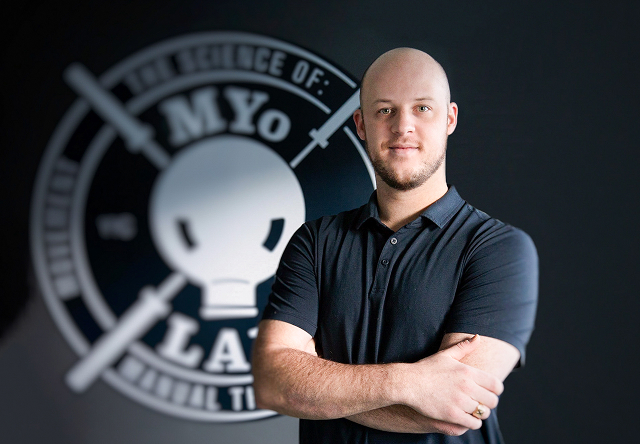
Book your massage appointment with our RMT, Zack Hynes, here. You can also call us at (403) 930-8686 or email us at info@myolab.ca for more information. We’re conveniently located 5 minutes from Sunnyside C-Train with complimentary parking.
Written & fact-checked by Zack Hynes.
 Related Articles