 Massage Therapy for Stress vs Physical Tension: What’s the Difference?
Many people book a massage because they feel “tight.”
The interesting part is that tightness doesn’t always come from the same place.
Sometimes it’s the result of physical demands. Long hours at work, repetitive movements, intense workouts, or spending too much time sitting can all create tension throughout the body.
Other times, the source is less obvious.
You may not have changed anything physically, yet your neck feels tight, your shoulders are elevated, and your back feels stiff by the end of the day.
In these situations, stress may be playing a larger role than you realize.
Understanding the difference between stress-related tension and physical tension can help you choose the most appropriate type of massage and get better results from your care.
Stress and physical tension often feel similar
One of the reasons people struggle to identify the source of their tension is that the symptoms can feel almost identical.
Whether the tension is driven primarily by physical workload or stress, people often describe:
- Tight shoulders
- Neck stiffness
- Upper back tension
- Jaw tension
- Headaches
- Feeling like they can never fully relax
The body doesn’t always separate physical stress from mental stress.
Both can create real physical changes in how muscles feel and how the body responds throughout the day.
This is why a thorough conversation with your massage therapist is often just as important as the treatment itself.
What is physical tension?
Physical tension is typically related to the demands being placed on the body.
Some common examples include:
- Sitting at a desk all day
- Repetitive lifting
- Physical labour
- Sports and training
- Long periods of driving
- Repetitive movement patterns
Over time, certain muscles may begin carrying more workload than others.
As a result, people may notice:
- Persistent tightness
- Muscle fatigue
- Reduced movement comfort
- Recurring “knots”
- Areas that always seem to need attention
Physical tension is often more localized.
Someone may point directly to:
- Their low back
- Their upper traps
- Their hips
- Their forearms
and say, “This is where I always feel it.”
What is stress-related tension?
Stress-related tension can look very similar on the surface, but the driving factors are often different.
When stress levels remain elevated for extended periods, many people unconsciously begin carrying tension throughout their bodies.
Common areas include:
- Neck
- Shoulders
- Upper back
- Jaw
- Chest
You may notice:
- Your shoulders sitting higher than normal
- Clenching your jaw throughout the day
- Feeling physically tense even when resting
- Difficulty relaxing
- Poor recovery between workdays
Some people wake up feeling tense before they’ve even started their day.
Others notice their symptoms become worse during busy periods at work, major life events, or times when they feel mentally overwhelmed.
The body is constantly responding to what it perceives as stress, whether that stress is physical, emotional, or mental.
Can stress create real physical symptoms?
Absolutely.
This is one of the biggest misconceptions people have. Sometimes people think stress-related tension is “all in their head.” The reality is that stress can create very real physical symptoms.
Many people experience:
- Tight muscles
- Reduced movement comfort
- Increased sensitivity
- Fatigue
- General feelings of stiffness
The symptoms are real.
The source is simply different from someone who developed tension primarily from physical workload.
Understanding that difference helps guide treatment recommendations.
What Does the Research Say About Stress and Muscle Tension?
The connection between stress and physical tension isn’t just something people notice anecdotally. Researchers have found that psychological stress can produce measurable changes in the body, including increased muscle activity, altered movement patterns, and heightened sensitivity to pain.
When the body perceives stress, the nervous system prepares for action by increasing muscle tension and releasing stress hormones such as cortisol and adrenaline. While this response is useful in short-term situations, prolonged stress can leave muscles in a persistent state of guarding, particularly around the neck, shoulders, jaw, and upper back.
Research has also shown that people experiencing higher levels of stress are more likely to report musculoskeletal pain and discomfort. This helps explain why tension often develops even when there hasn’t been a specific physical injury or increase in activity.
Understanding this relationship allows massage therapists to consider not only what feels tight, but also why those tissues may be remaining tense.
How massage therapy can help with stress

Massage therapy has been studied not only for pain management but also for its effects on stress and overall well-being.
Research suggests massage therapy may help reduce perceived stress, improve relaxation, and temporarily lower levels of stress-related hormones such as cortisol while supporting activation of the parasympathetic (“rest and recover”) nervous system. Many people also report improvements in mood, sleep quality, and overall feelings of well-being following treatment.
It’s important to recognize that massage isn’t intended to eliminate the sources of stress in someone’s life. Instead, it can help the body respond differently to those demands by promoting relaxation and supporting recovery alongside healthy habits such as regular movement, exercise, and stress management.
This is where relaxation massage can be particularly beneficial.
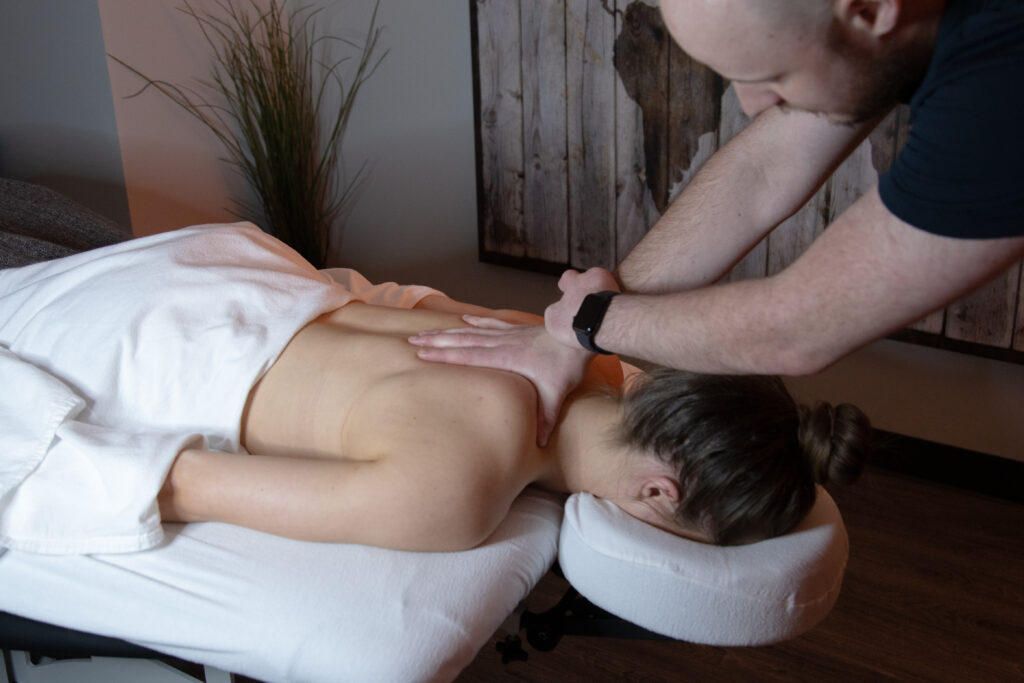
Relaxation massage typically focuses on:
- Longer flowing strokes
- Full-body treatment
- Slower pace
- General Swedish massage techniques
- Creating an overall sense of relaxation
One thing people often misunderstand is that a relaxation massage is not always light pressure.
A skilled therapist can still use moderate pressure when appropriate.
The difference is usually the intent and flow of the treatment.
Rather than focusing heavily on one specific area, relaxation massage tends to address the body more globally.
The goal is often to help the nervous system settle while reducing overall tension patterns.
Many people leave feeling:
- More relaxed
- Less tense
- More comfortable moving
- Better recovered from daily stress
At MYo Lab, massage therapy is viewed as one component of a broader movement-based approach to helping people feel and move their best.
How massage therapy can help with physical tension
When physical tension is the primary concern, treatment often becomes more targeted.
This may involve:
- Deep tissue techniques
- Trigger point work
- Focused treatment areas
- Specific muscle groups carrying increased workload
For example, if someone works in construction and consistently develops tension in their low back and hips, treatment may focus heavily on those areas.
Similarly, an office worker with recurring neck and upper trap tension may benefit from more focused work in those specific regions.
The goal is to address the areas carrying the greatest physical demand.
Deep tissue massage vs relaxation massage
This is where many people get confused. We cover a lot of that in our blog on Deep Tissue vs Relaxation Massage: What Does Your Body Actually Need?.
They assume:
- Relaxation massage is for stress
- Deep tissue massage is for physical tension
While that is sometimes true, it’s not always that simple.
Many people experience a combination of both.
For example:
- A busy professional may have high stress levels and significant neck tension.
- A parent may be physically tired and mentally exhausted.
- An athlete may have a physical workload while also experiencing life stress.
In these situations, the most effective treatment is often a combination of approaches.
A therapist may begin with broader relaxation-focused techniques and then spend more time addressing specific areas of tension.
Treatment should always be tailored to what the person actually needs rather than fitting them into a single category.
How do you know which massage is right for you?
The best place to start is with an assessment and conversation.
Your massage therapist should ask questions about:
- Your goals
- Work demands
- Activity levels
- Stress levels
- Previous treatment experiences
- Areas of concern
From there, recommendations can be made based on:
- Objective findings
- Your goals with care
Sometimes the treatment someone requests is exactly what they need.
Other times, the therapist may identify a different approach that is more likely to help them achieve their goals.
Part of a massage therapist’s responsibility is helping educate patients on what they’re finding and why they are making certain recommendations.
The best massage is the one that matches your needs
Many people spend too much time trying to decide whether they need a relaxation massage or a deep tissue massage.
In reality, the answer depends on what is driving the tension.
If stress is the primary factor, a relaxation-focused approach may be beneficial.
If physical workload is creating localized tension, more targeted treatment may be appropriate.
If both factors are present, a combination approach often makes the most sense.
Good massage therapy is rarely about choosing one style forever.
It’s about matching the treatment to what your body needs at that moment.
Final thoughts
Stress and physical tension often feel similar, but they don’t always come from the same source.
Physical tension is usually related to workload, movement patterns, and the demands placed on the body. Stress-related tension often develops as the body responds to ongoing mental and emotional stress.
Both can create real physical symptoms, and both can influence how your body moves and feels day to day.
The most effective massage therapy approach starts with understanding what’s contributing to the tension in the first place.
Once that is clear, treatment can be tailored to your goals, your body’s needs, and how you respond to care over time.
Book your massage appointment with our RMT, Zack Hynes, here. You can also call us at (403) 930-8686 or email us at info@myolab.ca for more information. We’re conveniently located 5 minutes from Sunnyside C-Train with complimentary parking.
Written & fact-checked by Zack Hynes
 Related Articles