 Can Massage Help with Posture?
Posture is one of the most talked-about—and misunderstood—topics in health and wellness.
Many people worry when they notice rounded shoulders, a forward head position, slouching while sitting, or tension through the neck, shoulders, and upper back. That often leads to the same question:
A common question massage therapists hear is:
Can massage help with posture?
The short answer is yes: massage therapy can help improve posture-related tension and movement restrictions. However, posture is more complex than simply loosening a few tight muscles.
Understanding what posture actually is, and what influences it, helps set realistic expectations and often leads to better long-term results.
What Is Posture?
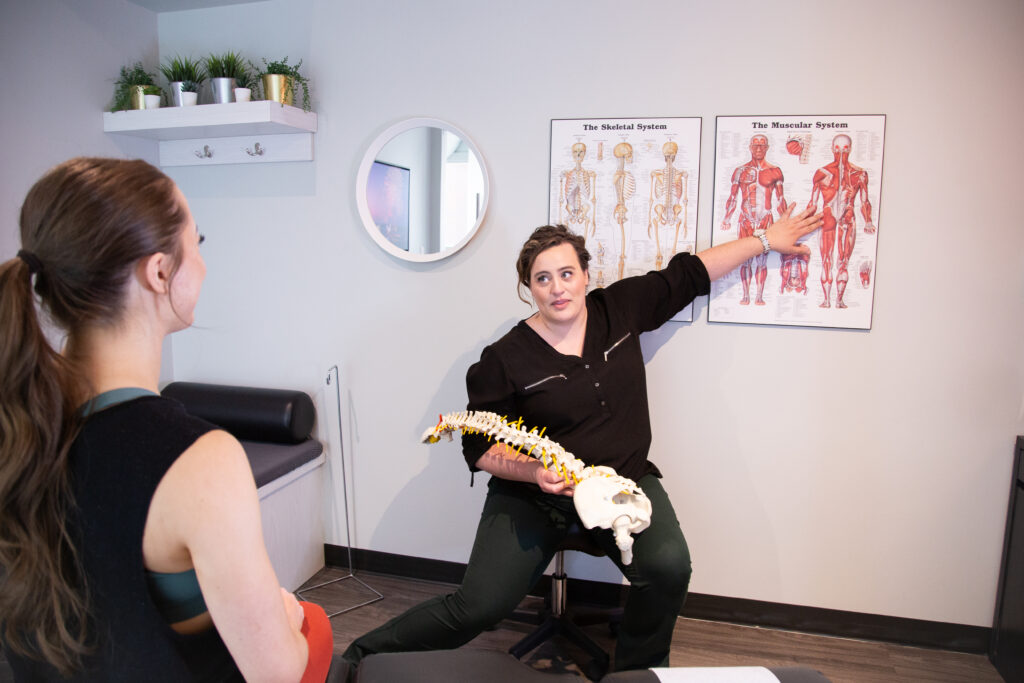
Posture is simply the position your body holds while sitting, standing, moving, or performing daily activities. Many people imagine there’s one “perfect” posture that everyone should maintain all day long.
In reality, the body is designed to move.
The goal is not to hold one rigid position for hours at a time. The goal is having the ability to comfortably move between positions and tolerate the demands of daily life.
Someone can appear to have textbook posture and still experience tension. Another person may not look “perfectly” aligned and feel completely comfortable.
This is why modern conversations around posture focus less on finding a perfect position and more on improving movement options and reducing unnecessary strain.
Why Posture Changes Over Time
Posture is heavily influenced by what we do repeatedly.
The body adapts to:
- Desk work
- Driving
- Looking at phones
- Physical labour
- Sports and training
- Stress
- Daily habits
For example, someone who spends eight hours a day at a computer may gradually develop:
- Forward head posture
- Rounded shoulders
- Increased tension through the neck
- Tightness between the shoulder blades
This does not necessarily mean something is damaged.
It often means the body has adapted to the positions it spends the most time in.
The same thing can happen to tradespeople, athletes, healthcare workers, and virtually anyone who repeats the same movement patterns consistently.
What Is Forward Head Posture?
Forward head posture is one of the most common posture concerns people notice. This occurs when the head gradually sits farther forward relative to the shoulders.
People often describe it as:
- “Tech neck”
- Looking down at screens all day
- Feeling like the head is always pulled forward
When this position becomes habitual, people may notice:
- Neck tension
- Upper trap tightness
- Stiffness through the shoulders
- Tension headaches
- General discomfort in the upper body
While posture is only one factor, these movement patterns often create increased workload for certain muscles.
Over time, those muscles may become tired, overworked, or consistently tense.
How Massage Therapy May Help Posture
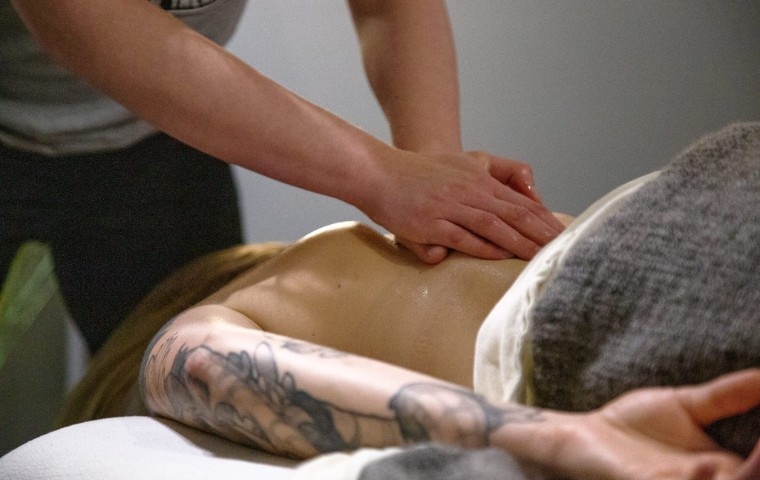
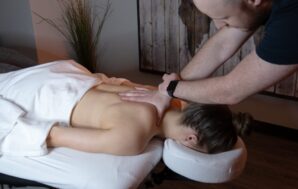
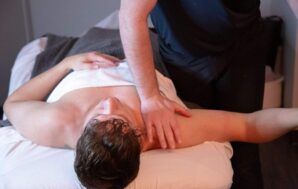
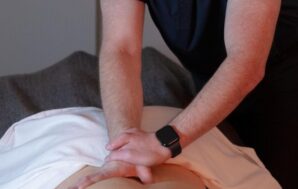
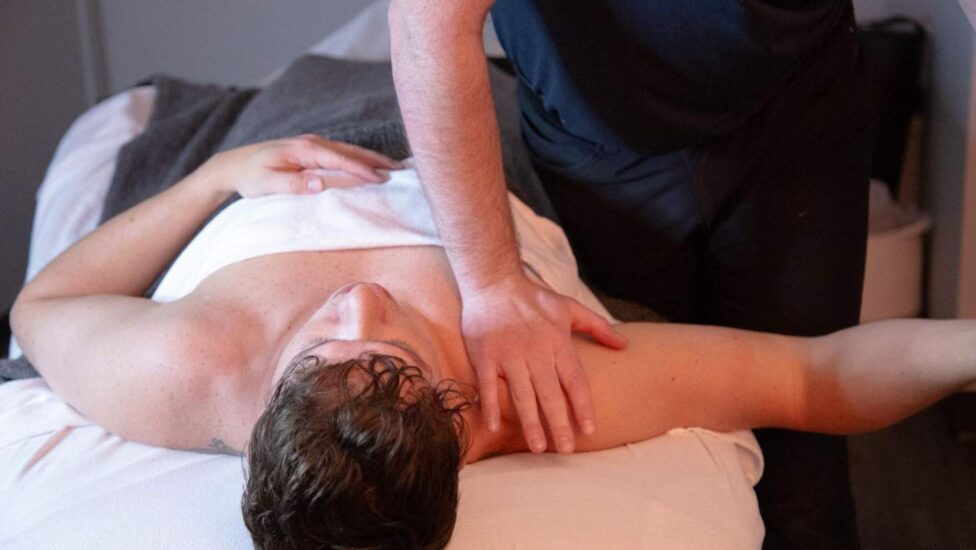
Massage therapy can help address some of the physical adaptations associated with posture-related tension.
Treatment may help:
- Reduce muscle tension
- Improve movement comfort
- Improve awareness of body position
- Reduce feelings of stiffness
- Improve mobility in restricted areas
- Support recovery from repetitive daily stress
Many people find it easier to sit, stand, and move comfortably after treatment because areas carrying excess tension have been addressed.
However, it’s important to understand that massage therapy does not force the body into a new posture.
Instead, it may help create an environment where movement feels easier and restrictions are reduced.
Why Massage Alone Is Usually Not Enough
This is one of the most important concepts when discussing posture correction.
Let’s say someone spends 8 hours working at a desk, 1 hour commuting and several hours using a phone or tablet. That person is spending a large portion of their day in similar positions.
A massage treatment may help reduce tension that has accumulated from those positions, but the body will continue adapting to whatever it does most often.
This is why posture improvements are often greatest when massage therapy is combined with:
- Regular movement
- Strengthening exercises
- Mobility work
- Better workstation setup
- More movement throughout the day
Massage can help support those changes, but lasting improvements usually involve addressing the daily habits that contribute to the tension.
Tight Muscles Are Only Part of the Story
Many people assume tight muscles alone cause poor posture.
The reality is usually more complicated.
Posture is influenced by several things, like:
- Movement habits
- Strength
- Endurance
- Workload
- Recovery
- Stress
- Previous injuries
- Daily routines
Someone may have tight chest muscles and rounded shoulders.
Another person may have similar posture but completely different contributing factors.
This is why assessments matter. Looking at the whole person often provides more useful information than focusing on one muscle group.
The Role of Assessment
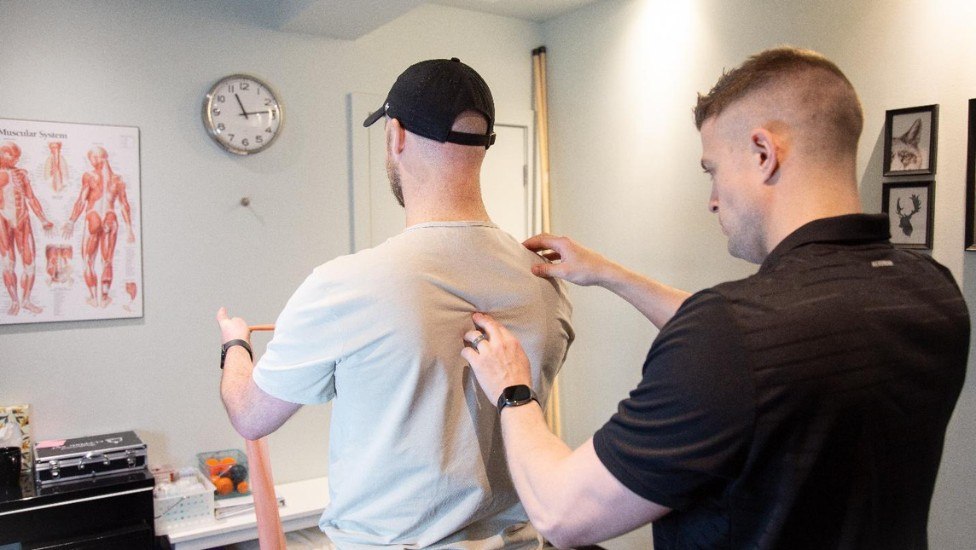
When someone comes in concerned about posture, a massage therapist should look at more than just how they stand.
A thorough assessment may consider:
- Daily activities
- Work environment
- Movement patterns
- Areas of tension
- Previous injuries
- Exercise habits
- Goals with care
This helps identify where the body may be carrying excess workload and what factors could be contributing to recurring tension.
Treatment recommendations should be based on both:
- Objective findings
- The individual’s goals
As treatment progresses, those recommendations should continue to be reassessed based on how the body responds.
Can Massage Correct Posture?
This is where expectations matter.
Massage therapy does not permanently fix posture after one session.
The body changes because of repeated habits and repeated exposure to certain positions over time.
Meaningful posture improvements typically happen through a combination of:
- Reducing tension
- Improving movement options
- Building strength
- Improving body awareness
- Creating healthier movement habits
Massage therapy can support that process by helping the body move more comfortably and reducing areas of excessive tension.
The goal is not achieving a perfect posture.
The goal is helping the body function well and tolerate daily demands more effectively.
Why Movement Often Matters More Than Posture
One of the most helpful concepts for many people is understanding that movement often matters more than maintaining one ideal position.
Even a good posture can become uncomfortable if it is held for hours without movement.
The body generally responds best to:
- Position changes
- Regular movement
- Activity variation
- Appropriate recovery
People who move frequently throughout the day often experience fewer issues than people who remain in one position for long periods.
This is one reason many posture-related recommendations focus on movement habits rather than simply telling people to “sit up straight.”
Looking Beyond Perfect Posture

So, can massage help with posture?
For many people, yes.
Massage therapy can help reduce tension, improve movement comfort, and address some of the physical stress that develops from repetitive positions and daily habits.
However, posture is rarely about one tight muscle or one simple fix.
Long-term improvements often come from combining massage therapy with movement, strength, mobility, and awareness of how you use your body throughout the day.
The objective isn’t achieving perfect posture.
The objective is helping your body move comfortably, tolerate daily demands, and continue functioning at its best over time.
Book your massage appointment with our RMT, Zack Hynes, here. You can also call us at (403) 930-8686 or email us at info@myolab.ca for more information. We’re conveniently located 5 minutes from Sunnyside C-Train with complimentary parking.
Written & fact-checked by Zack Hynes
 Related Articles