For some of us, headaches are a mild inconvenience. But sometimes, depending on the intensity, duration, and frequency, they can also be a debilitating condition.
Headaches are characterized by pain or discomfort in the head or upper neck. Interestingly enough, your brain tissue doesn’t have any pain-sensitive nerve fibres, so it doesn’t experience pain. It’s other parts of your head that are responsible for the pain you feel during these headaches.

The People Model Mgmt
Pam W.
Matt M.

Headaches are broadly categorized into primary and secondary types; we’ll cover some of the most common ones:
Primary Headaches: These aren’t caused by another medical condition and include:
Secondary Headaches: These result from underlying health issues, such as infections, head injury, or vascular disorders. Conditions like sinus infections or aneurysms can lead to secondary headaches
The causes of headaches completely depend on the type. For example:
 In addition to the above, there are several other causes of primary headaches:
Alcohol, specifically red wine
Poor posture
Lack of sleep for days on end
Skipping meals
Stress
Sleeping incorrectly (you’ll notice this if you wake up with a headache)
Other general causes for secondary headaches could be:
Not drinking enough water
Dental problems
Ear infections
Hypertension
Flu
Spinal headaches
Here’s our Chiropractor’s take on effectively stretching your neck to minimize headaches:
Tension Headaches
Migraines
Cluster Headaches
Sinus Headaches
Posttraumatic Headaches
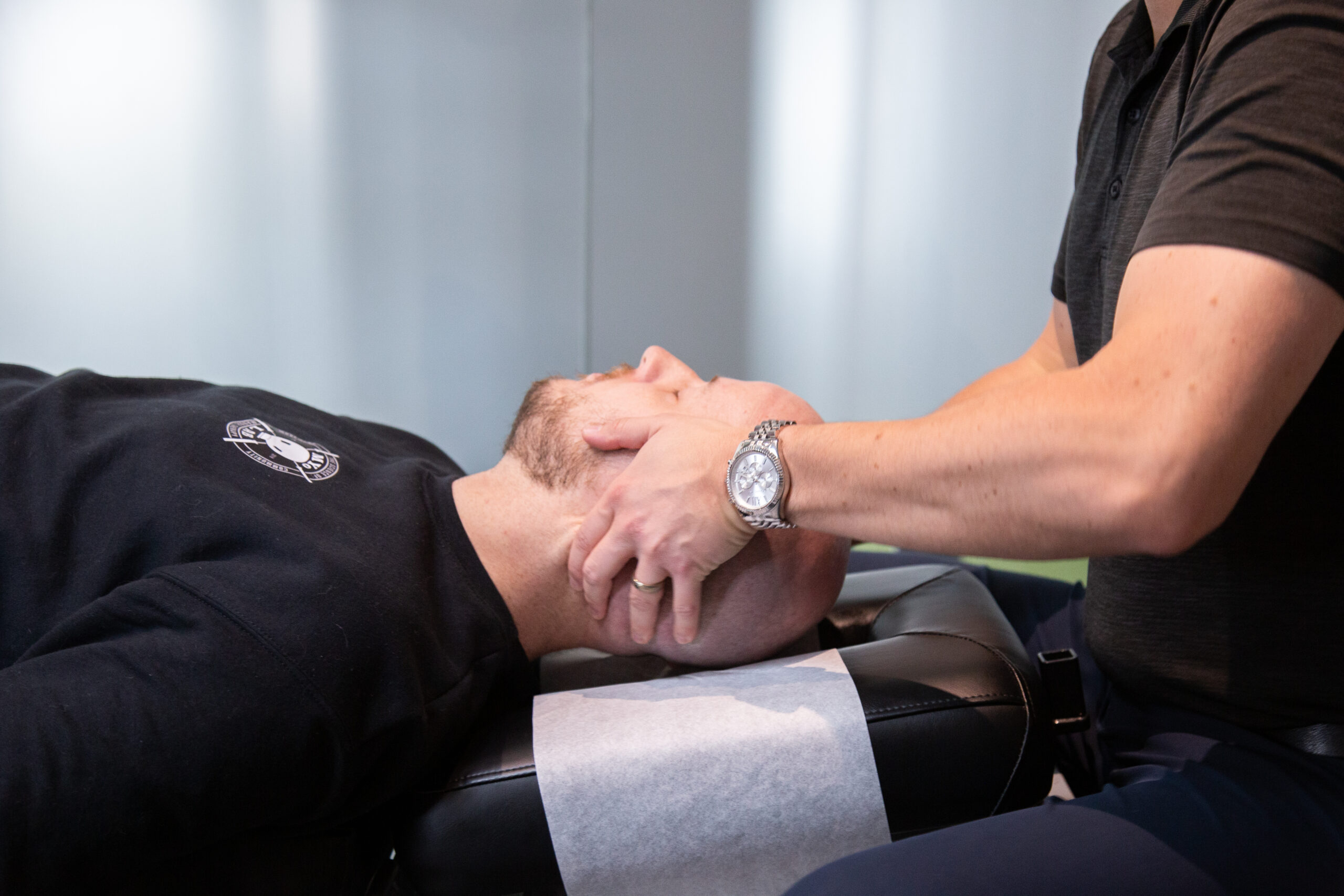
Our team may treat headaches through a combination of spinal adjustments, Soft Tissue therapy, Dry-needing, Acupuncture, Exercise Rehabilitation and lifestyle advice.
Here’s a detailed look at how we may approach headache treatment:
Headaches may sometimes originate from misalignments or tension in the spine, particularly in the cervical (neck) region, termed a cervicogenic headache. We use specific techniques to adjust the spine, aiming to improve spinal function and alleviate stress on the nervous system. This can help reduce the frequency and severity of the headaches you experience.
There are lots of studies that have shown how Spinal Manipulative Therapy (i.e., “adjustments”) can be effective for certain types of headaches, such as tension headaches and cervicogenic headaches, which are headaches that stem from neck issues.
Tight muscles in the neck, shoulders, and upper back can refer pain into the head, contributing to tension headaches and cervicogenic headaches.
Here’s how Massage Therapy can help:
Note: Massage therapy is most effective for tension-related and cervicogenic headaches, and may be part of a broader care plan depending on the type and cause of headaches.
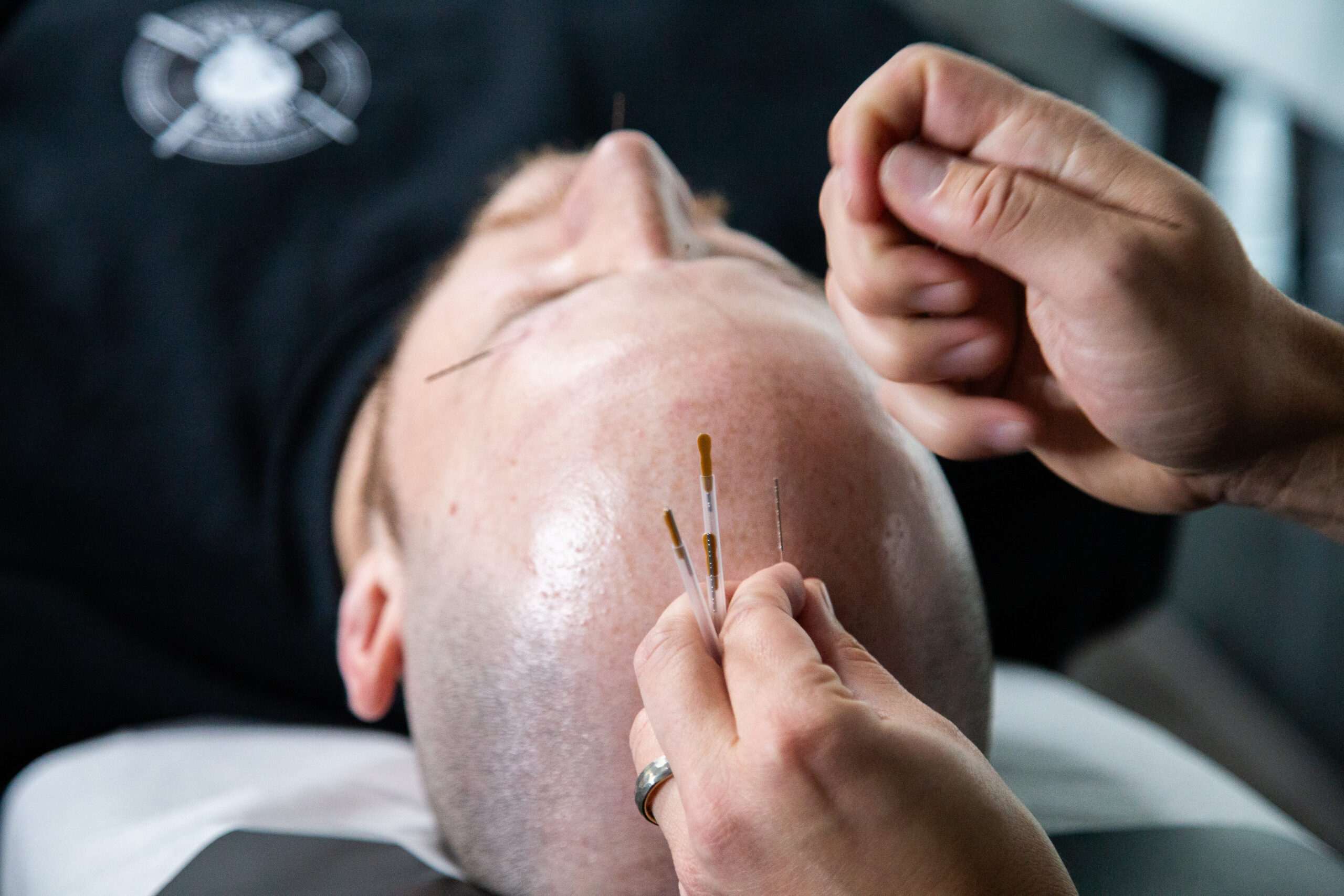
Both Acupuncture and Dry-needling are great options and offer minimally invasive options for headache relief.
A traditional Chinese medicine technique, Acupuncture involves inserting tiny needles into specific points on your body to balance the body’s energy flow, or “qi.” This helps relieve headache symptoms by reducing muscle tension, increasing blood flow, and stimulating the release of pain-relieving chemicals in the body, such as endorphins.
Dry-needling is a more recent therapeutic technique similar to acupuncture, but it specifically targets myofascial trigger points—tight, tender knots in muscles that can refer pain to other areas. For headache treatment, dry needling involves inserting thin needles directly into these trigger points to alleviate muscle tension, improve blood flow, reduce referred pain from the neck and shoulders to the head.
This technique can be particularly effective for tension headaches and cervicogenic headaches, which are headaches originating from musculoskeletal issues in the neck.
Your headaches could also be a result of lifestyle choices, and we want to be able to address those as well. This can include:
In the end, as Chiropractors, we use a holistic approach to treating headaches. This multifaceted approach allows us to address the root causes of your headaches and provide long-term relief.
Here are some neck exercises you can try out:
MYo Lab Health & Wellness is located at 227 10 St NW, Suite 300, Calgary, Alberta. It’s a short 5-minute walk from the Sunnyside C-Train station.
Parking: We offer 5 complimentary parking spots out back (spots 209, 213, 214, 215, 216). There are also several 2-hour paid parking spots on the streets around us. Additionally, there are two parking lots across the street from our building, one outdoor parking lot and one underground parking lot.
If you need further direction, feel free to call (403) 930-8686 for assistance.

Headaches
Whiplash
TMJ Dysfunction (Jaw Pain)
Neck Pain
Middle And Low Back Pain
Disc Herniations
Sciatica
Shoulder Pain
Arthritis
Elbow & Wrist Pain
Ankle And Foot Pain
Hip Pain
Knee Pain
Mobility Issues
Sports Injuries
Posture Problems
General Health/Well-Being
Neuropathy And Nerve Entrapments
Motor Vehicle Accident (MVA)
Workers Compensation Board (WCB)
Chiropractic care may offer relief for some migraine sufferers, particularly those whose headaches are triggered or exacerbated by musculoskeletal issues. Chiropractors often focus on spinal adjustments and manipulations to alleviate tension and improve motion in the spine, which can potentially reduce headache frequency and severity. Additionally, soft tissue release techniques and dry needling have been proven to also help relieve tension in areas, which again improves spinal mobility and can have a positive effect on some people who suffer from migraines. After completion of your assessment, your Chiropractor will be able to determine if Chiropractic care is likely to be an effective way to manage or resolve your migraine symptoms.
If you’ve been experiencing uncontrollable headaches or migraines and are looking for a natural way to manage them, book an appointment with one of our Chiropractors or Registered Massage Therapists.
Alternatively, you can call us at (403)930-8686. We’re currently accepting new members.