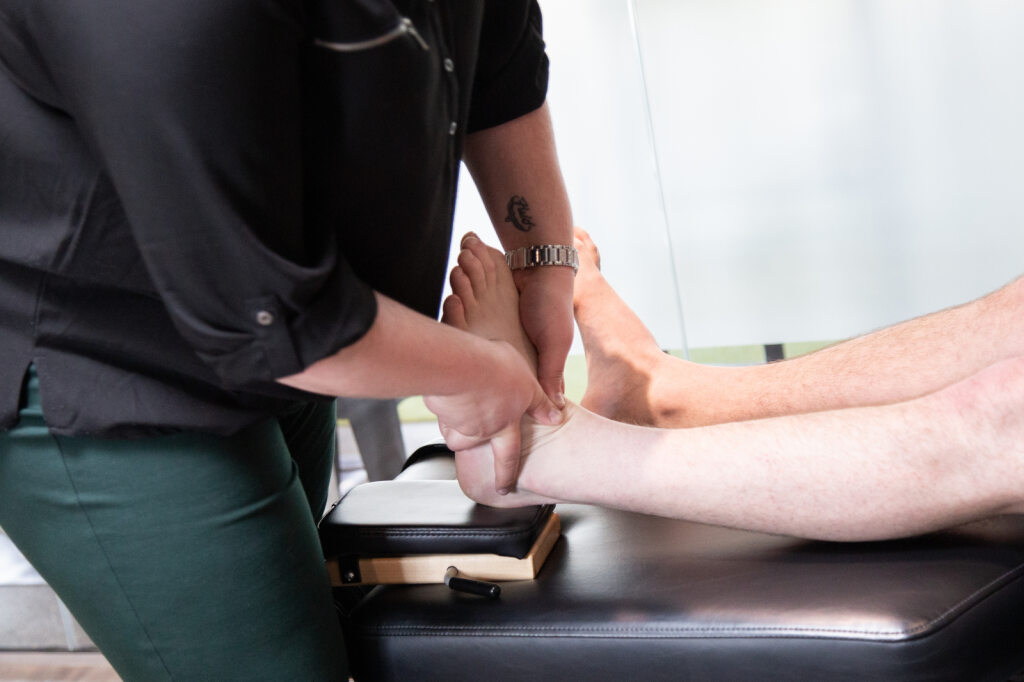
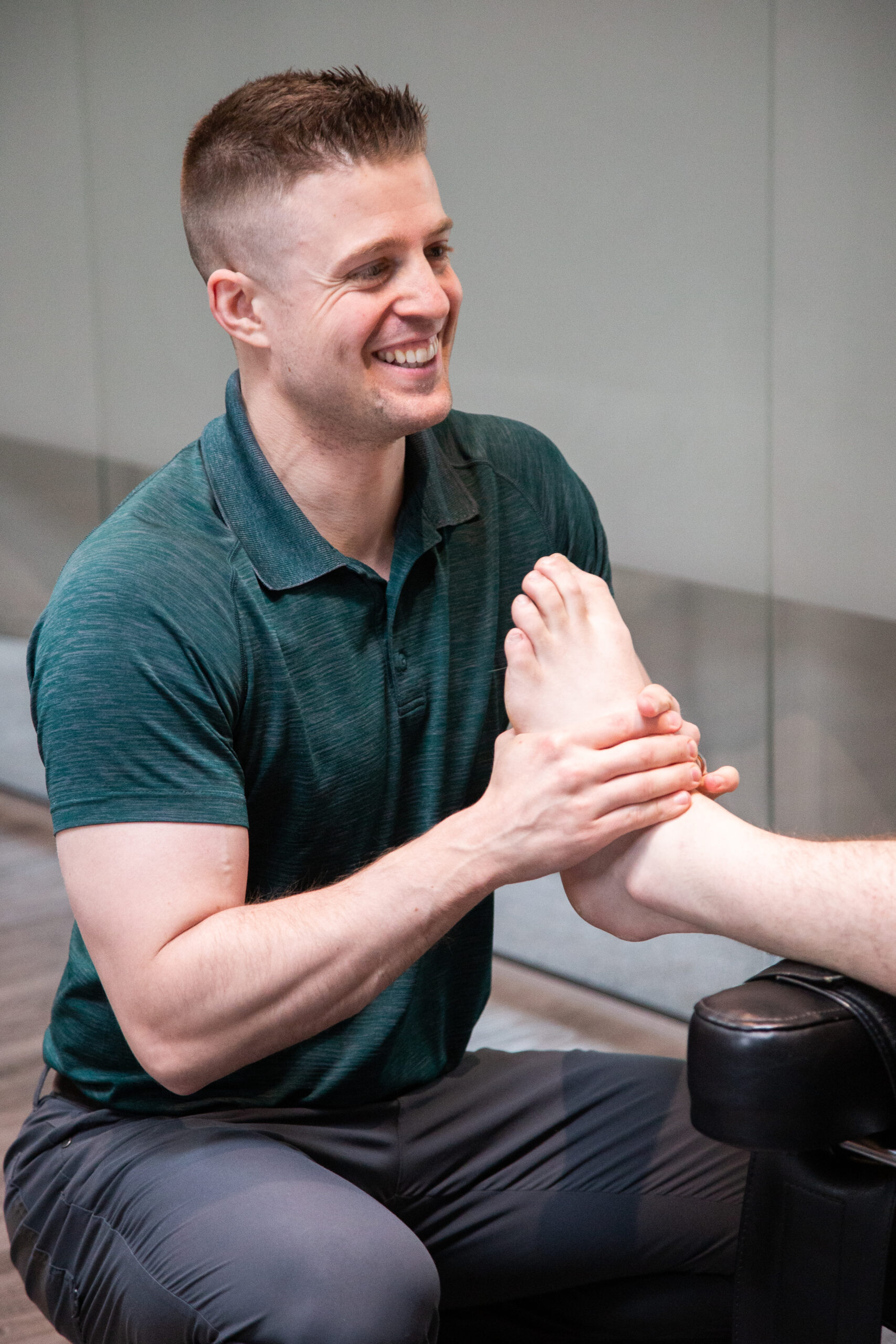
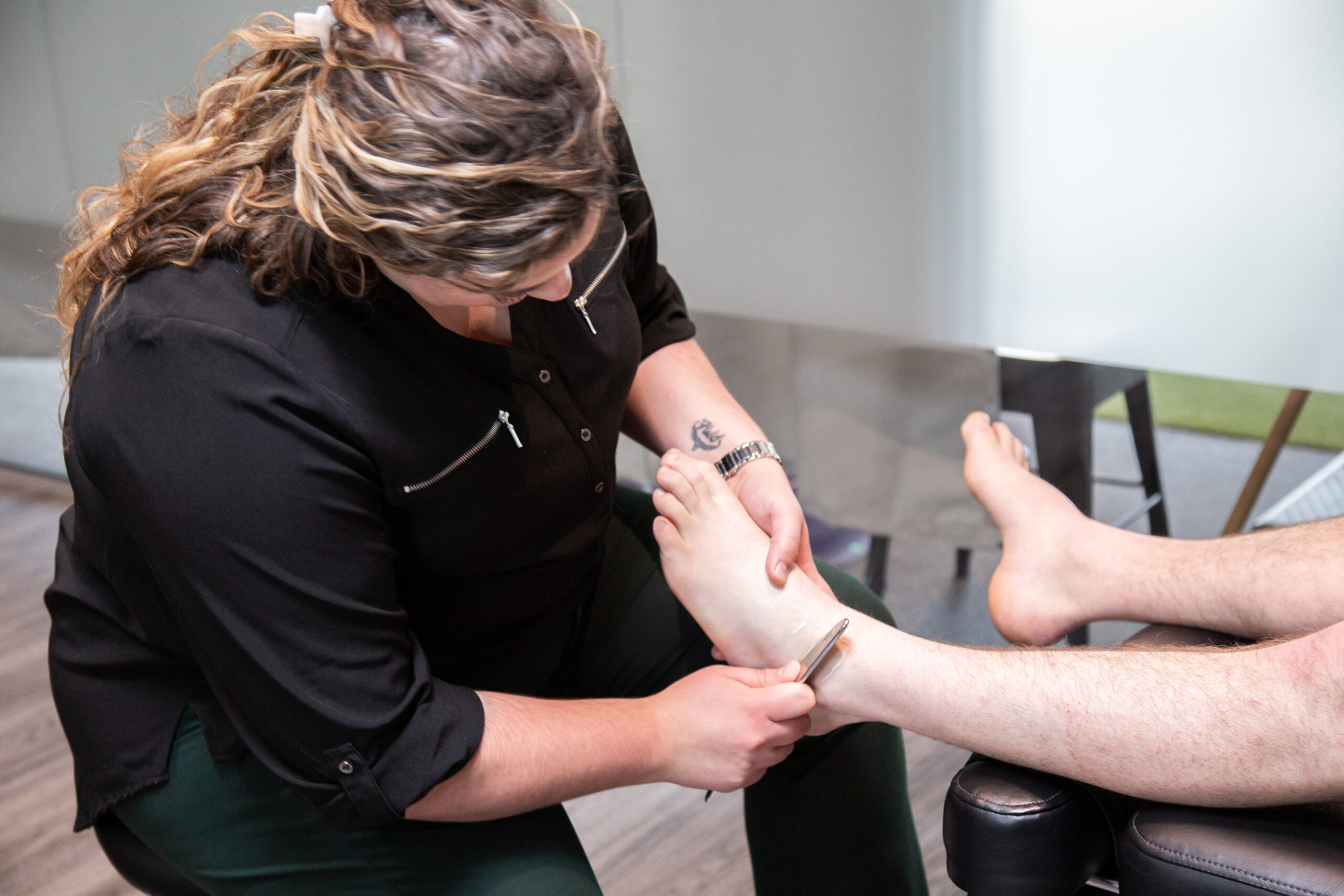
We’re trained to assess and treat musculoskeletal issues, including those affecting the ankles and feet. To address pain and dysfunction in these areas, we use a combination of hands-on techniques, therapeutic exercises, and lifestyle recommendations.
But first, we get to the bottom of the problem. It’s not about quick fixes to manage temporary symptoms. Our approach will completely depend on each of our members’ needs. There is no one-size-fits-all approach.
Broadly speaking, for conditions like arthritis, tendinitis, and plantar fasciitis, our team will employ joint mobilization, soft tissue techniques, and rehabilitative exercises to reduce inflammation, improve mobility, and strengthen surrounding muscles.
In cases of acute injuries such as sprained ankles or stress fractures, we focus on providing supportive care to promote healing and restore proper joint function. This may involve immobilization techniques, modalities, gentle adjustments and/or stretches to compensating areas, and personalized rehabilitation programs.
For chronic conditions like gout, bunions, or Morton’s neuroma, our approach is holistic approaches to manage symptoms, including dietary and lifestyle recommendations, ergonomic adjustments, and supportive therapies (including, but not limited to, Shockwave Therapy, Custom Foot Orthotics, etc.) to alleviate pain and discomfort.
It also comes down to underlying biomechanical issues that contribute to foot and ankle problems, such as fallen arches, hammertoes, or improperly fitted shoes. Here, we want to correct alignment issues and provide guidance on proper footwear and foot care to prevent further complications.
The focus is always to slowly and gradually improve mobility—to keep you moving.
For more on our approach, watch Dr. Evan Schwindt as he takes you through an entire ankle rehabilitation protocol from top to bottom.
 Experience the Difference