Why You Might Feel Tight Even When You’re Not Injured
A lot of people expect muscle tightness to show up only after an injury or an intense workout. So when you feel stiff, achy, or “tight” day to day—without anything specific triggering it—it can feel confusing.
In many cases, muscle tightness isn’t about something being “wrong.” That’s a misconception we hear most often. It’s more about how your body is adapting to daily movement, posture, and lifestyle demands.
Tightness doesn’t always come from injury
Muscle tightness can show up even when there hasn’t been a specific strain or injury. It’s often related to how muscles are being used over time, rather than a single event.
You might notice tightness even if you:
- Haven’t had an injury
- Are still staying active
- Are stretching regularly
This tightness is often a reflection of how your body is distributing load and effort throughout the day.
How muscles can contribute to tightness and weakness at the same time
One way to understand tightness is through how muscles function along a spectrum of length and tension.
In simple terms, muscles can sometimes behave as though they’re either in a shortened or lengthened position relative to what’s optimal for them.
- When a muscle tends to be in a more shortened position, it may not always move through its full available range, which can affect how efficiently it produces force.
- When a muscle is in a more lengthened or stretched position, it may also struggle to generate efficient force because it is operating outside of an ideal position for contraction.
In both cases, a muscle can feel like it is not functioning at its best, and this can sometimes present as both tightness and weakness at the same time.
Tightness as a protective response
In some situations, muscle tightness can also be understood as a protective response. This is because muscles attach to bone and work alongside other tissues to support and control movement. When certain areas are under more load, or placed in less familiar positions for extended periods, the body may naturally increase muscle tension in those regions.
This can act as a way of providing additional support and stability during movement.
While ligaments are the primary structures responsible for joint stability, muscles can also contribute to this protective role by adjusting tone and tension based on demand.
Why tightness can become “normal” over time
Another important factor is that tightness is often shaped by repetition and lifestyle habits.
As humans, we spend a lot of time in consistent positions:
- Sitting at work or driving
- Standing in similar postures
- Repeating daily movement patterns
- Sleeping in consistent positions
Over time, these repeated positions can influence how the body adapts. Certain muscles may become more dominant, while others contribute less. This can lead to a sense of ongoing tightness that feels familiar or “normal” for that individual.
In many cases, this isn’t necessarily a sign that something is wrong; it may simply reflect how the body has adapted to the demands placed on it over time.
Why stretching alone doesn’t always solve it
Stretching can feel helpful in the moment, but tightness often returns if the same movement patterns continue.
That’s because tightness is often less about a single muscle being “short,” and more about how the body is coordinating movement and load across different areas.
What can help over time
Many people find that lasting changes come from a combination of:
- Increasing variety in daily movement
- Reducing repeated stress on the same areas
- Supporting a better balance between different muscle groups
- Improving awareness of how the body is moving throughout the day
- Incorporating hands-on care to help reduce tension and support movement quality
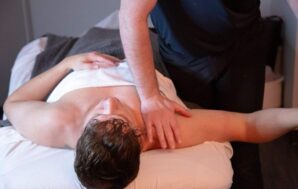
Massage therapy can be one way to support this process by helping reduce muscle tension, improving how the body feels during movement, and complementing longer-term changes in daily habits.
The takeaway

Feeling tight doesn’t automatically mean something is injured or damaged. In many cases, it reflects how your body is adapting to the positions, loads, and routines it experiences every day. Understanding that can shift the focus away from short-term relief alone, and more toward long-term movement balance and consistency.
If you’re constantly feeling tight even without an injury, it’s often your body responding to stress, movement habits, or underlying compensation patterns rather than true tissue damage.
Book your massage session with Zack Hynes, Registered Massage Therapist. You can also call us at (403) 930-8686 or email us at info@myolab.ca for questions about appointment booking or insurance. We’re conveniently located 5 minutes from Sunnyside C-Train with complimentary parking.
Written & fact-checked by Zack Hynes
 Related Articles