
 How Often Should You Get a Massage? (It Depends on How You Move)
One question we get asked often is: “How often should you get a massage?”
The honest answer (no one likes) is that it depends.
Not just on how tight or sore you feel, but on:
- How you move throughout the day
- Your activity levels
- Your workload
- Stress and recovery
- Previous injuries
- Your goals with care
There’s no universal massage schedule that works for everyone because everybody handles physical stress differently.
The best place to start is with an assessment
Initially, the best practice is to come in for an assessment with your massage therapist.
This helps us determine:
- What areas are under the most stress
- How your body is moving and compensating
- How long symptoms or tension patterns have been present
- What your goals are with care
Those goals matter.
For some people, the goal may be:
- Reducing general tension
- Improving recovery from training
- Supporting physically demanding work
- Improving movement comfort
- Maintaining overall wellness
The recommendation for care with us will always reflect both the objective findings during the assessment and what the person is hoping to achieve.
Sometimes expectations and goals may need to be adjusted along the way, depending on how the body responds to treatment over time.
There’s no “perfect” massage frequency
You’ve probably heard suggestions like:
- Once a month
- Every two weeks
- Once a week
But maintenance massage should never be completely generic. Someone sitting at a desk all day may have different physical demands than:
- A tradesperson
- A runner
- A healthcare worker
- A parent carrying young children
- Someone training multiple days per week
Massage frequency should match the demands being placed on the body.
Your daily movement patterns matter
A major reason people experience recurring tension or stiffness is repetition. The body adapts to what it does most often:
- Sitting for long periods
- Standing all day
- Repetitive lifting
- Intense training
- Limited movement variability
- Stress and poor recovery habits
Over time, certain muscles and joints can begin carrying more workload than others. This is often when people start noticing:
- Neck tension
- Tight shoulders
- Low back stiffness
- Hip tightness
- General body fatigue
Massage therapy can help reduce tension and improve movement comfort, but how long those effects last often depends on what the body returns to afterward.
Recommendations should evolve over time
One important thing to understand is that massage schedules are not meant to stay static forever. Care should be re-evaluated regularly based on:
- Objective findings
- How the body is responding
- Changes in activity or workload
- Progress toward goals
For example, someone may initially benefit from more frequent sessions during periods of higher physical stress or longstanding tension patterns. Over time, as movement, recovery, or tissue tolerance improves, recommendations may change. There’s no exact formula. The goal is to continually evaluate care moving forward based on both:
- Objective improvement in findings
- Subjective improvement in how the person feels
Both matter. It’s important that someone not only feels better temporarily, but that measurable improvements are also being observed over time.
Massage works best as part of a bigger picture
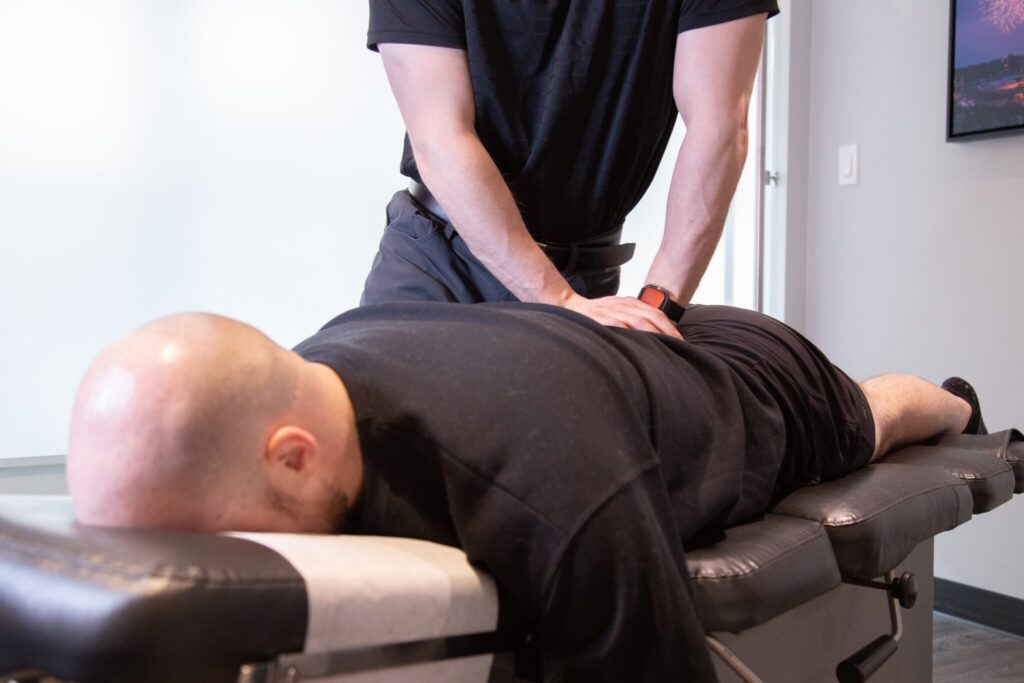
Massage therapy can play an important role in:
- Reducing muscle tension
- Supporting recovery
- Improving movement comfort
- Helping manage physical stress
But longer-term results are often strongest when combined with:
- Regular movement
- Strength and mobility work
- Recovery strategies
- Managing physical workload throughout the day
Massage is often most effective when it’s part of an overall approach to caring for the body, rather than only being used once symptoms become overwhelming.
So, how often should you get a massage?
There’s no single answer.
Some people do well with occasional visits, while others benefit from more consistent maintenance massage, depending on:
- Lifestyle
- Activity levels
- Physical demands
- Recovery capacity
- Goals with care
The most effective massage schedule is usually one that is individualized, re-evaluated regularly, and adjusted based on how the body responds over time.
Final thoughts

Massage therapy isn’t just about reacting to pain or tension once it becomes severe. For many people, it can become part of a proactive approach to managing physical stress, supporting recovery, and improving overall movement quality.
The key is finding a plan that matches both your body’s needs and your goals while continuing to reassess progress along the way.
If you’re trying to figure out how often you should be getting a massage, the real answer usually comes down to how your body is being used day to day, not a one-size-fits-all schedule.
Book your massage session with Zack Hynes, Registered Massage Therapist at MYo Lab. You can also call (403) 930-8686 or email us at info@myolab.ca if you have questions about your appointment or insurance. We’re conveniently located 5 minutes from Sunnyside C-Train with complimentary parking.
Written & fact-checked by Zack Hynes
 Related Articles