 Common Pain Patterns in Hypermobility (Neck, Shoulders, Hips & Low Back)
Hypermobility can be a strength in some settings—but for many people it also comes with recurring aches, “mystery” tightness, and joints that feel unstable or easily irritated.
At MYo Lab in Calgary, we often see hypermobile folks who aren’t just dealing with one sore spot. Instead, pain shows up in familiar patterns: the neck and shoulders flare together, hips and low back alternate, or one side of the body seems to do all the work.
Useful refresher: what hypermobility means
Hypermobility describes joints that move beyond what’s typical. Some people are naturally more flexible; others have generalized joint hypermobility across multiple areas.
Hypermobility doesn’t automatically mean pain. But when the body relies more on muscles and connective tissue to create stability, certain regions can become overworked—leading to common pain patterns.
Pattern 1: Neck pain + “upper trap” tightness
A very common complaint is a stiff neck paired with tight, sore muscles along the tops of the shoulders.
Why it can happen: – If the joints of the neck are more mobile, the nervous system may “ask” the surrounding muscles to guard and stabilize. – Prolonged sitting, screens, and stress can add load to an already hard-working area.
What it can feel like:
Achy neck, tight upper traps
Head/neck stiffness after work
A sense that the neck “needs to crack” often
Pattern 2: Shoulder discomfort + clicking + fatigue with overhead tasks
Hypermobile shoulders may feel loose, clicky, or easily irritated—especially with lifting, carrying, or overhead work.
Why it can happen: – The shoulder is built for mobility; if stability is lacking, the rotator cuff and shoulder blade muscles may fatigue quickly. – Small changes in shoulder blade control can shift load into the front of the shoulder or the neck.
What it can feel like:
Pinchy or achy shoulder with pressing or reaching
Clicking or shifting sensations (not always painful)
Rapid fatigue during workouts
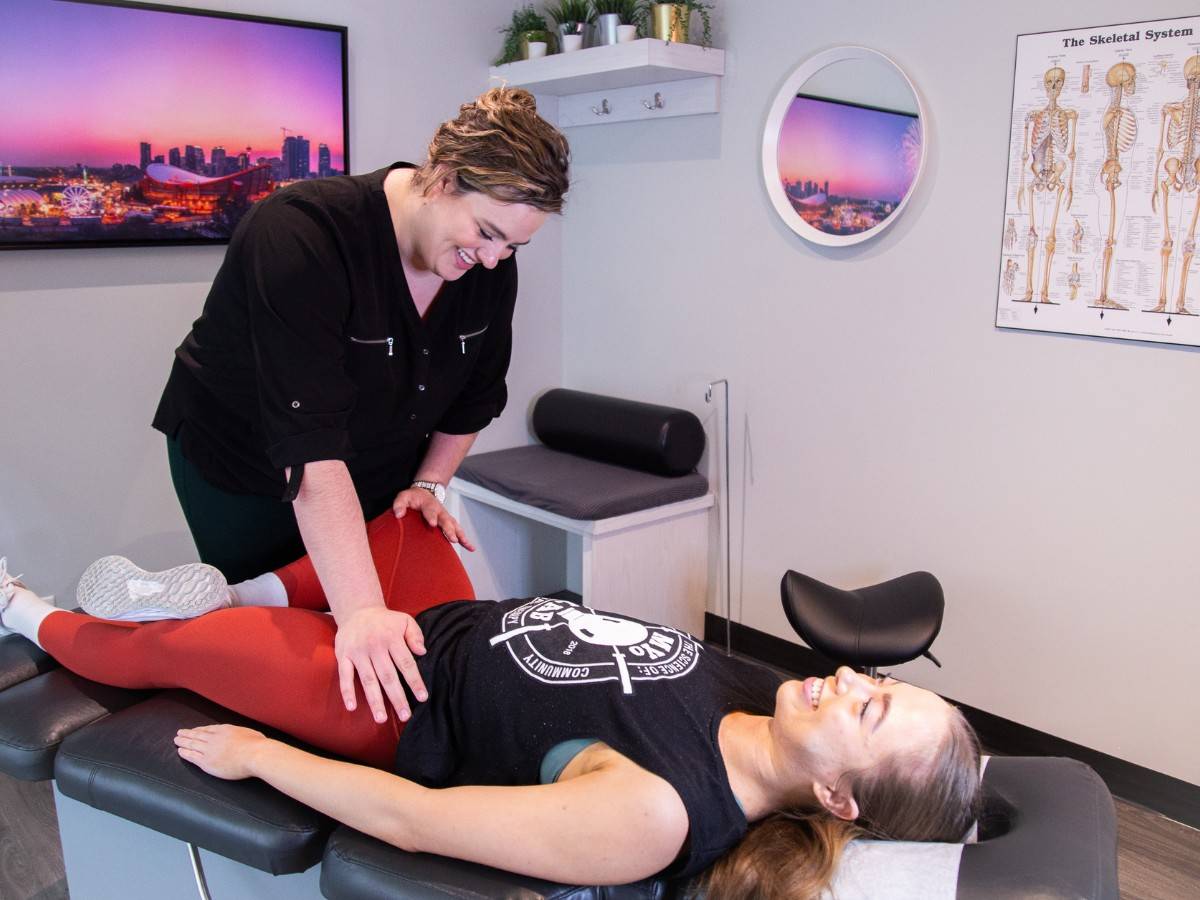
Pattern 3: Hip pain that alternates sides
For many hypermobile people, the hips can feel tight and sore while also feeling “too mobile.” Signs and Symptoms may switch sides depending on activity, sleep, or training.
Why it can happen: – The hip joint may move easily, but the pelvis and low back may compensate to create stability. – Glutes, deep hip rotators, and hip flexors can become overactive or guarded.
What it can feel like:
Deep ache in the hip or outer hip
Tight hip flexors
Discomfort with walking hills, stairs, or prolonged standing
Pattern 4: Low back pain with standing, walking, or “just existing”
Low back pain in hypermobility is often less about a single “injury” and more about repeated irritation from load management.
Why it can happen: – If the pelvis and lumbar spine move a lot, the muscles may constantly brace. – Some people default into end-range postures (locked knees, rib flare, anterior pelvic tilt) that increase strain.
What it can feel like:
Achy low back after standing or walking
“Compression” feeling after workouts
Relief when sitting or lying down (or sometimes the opposite)
Why pain often travels (and why that matters)
One of the most frustrating parts of hypermobility-related musculoskeletal pain is how it can migrate.
A key principle: the body will borrow motion and stability from somewhere. If one region is unstable or overworked, another region may pick up the slack—until it gets irritated too.
That’s why a full-body assessment can be so helpful: it’s rarely just the neck, just the hip, or just the low back.
What tends to help (in a practical, MSK-focused way)
Every plan should be individualized, but common building blocks include:
Assessment of joint control and movement patterns (not just “where it hurts”)
Strength and endurance work focused on stability (often slower tempo, lower range at first)
Motor control and proprioception training (your “joint position sense”)
Manual therapy and soft tissue work when appropriate to reduce sensitivity and improve comfort
Load management: adjusting training volume, intensity, and recovery
When to get assessed
Consider booking an assessment if you:
Have recurring pain in multiple areas
Feel unstable, clicky, or easily flared up
Struggle to “feel” certain joints during exercise
Keep getting told you’re “tight,” but stretching doesn’t help
Book at MYo Lab (Calgary)
If you think hypermobility may be contributing to your neck, shoulder, hip, or low back symptoms, our team can assess your movement, discuss what’s likely driving the pattern, and build a plan that fits your goals.
Book your assessment: – Call: (403) 930-8686 – Email: info@myolab.ca – Visit: 227 10 St NW, Suite 300, Calgary, AB
Conveniently located 5 minutes from Sunnyside C-Train with complimentary parking.
Written & fact-checked by Dr. Chantelle Green.
 Related Articles