 The Three Pillars of Corrective Care: Release, Stabilize, Strengthen
If you’ve ever started a rehab program, felt better after a few sessions, and then had your pain come back, you’re not alone. This is one of the most common patterns we see in clinical practice, and in our experience, it often comes down to one of two things: the program ended before the body was truly ready, or an important phase was missed along the way.
At MYo Lab, our approach to exercise rehabilitation is built around three pillars: Release, Stabilize, and Strengthen. Each phase has a specific purpose, and each one builds directly on the last.
Here’s what each phase actually means, why the order matters, and what the research says about it.
Pillar One: Release

Before you can move well, your tissues need to be ready to move.
Muscle guarding, fascial restrictions, and joint stiffness don’t just limit range of motion; they alter how load travels through your entire body.
When tissues are overloaded, injured, or chronically stressed, the nervous system responds by increasing muscle tone and restricting the range of motion (Hodges & Tucker, 2011). This is a protective response, but it becomes a problem when it persists beyond the acute stage. Restricted joints and tight muscles alter how load is distributed across the entire kinetic chain, leading to compensatory movement patterns that increase injury risk elsewhere.
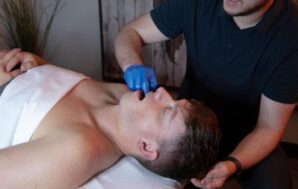
The release phase targets this directly. The goal is not simply to stretch, it’s to restore normal joint mobility, reduce excessive neural tension, and calm the nervous system enough to allow proper movement to occur.
At MYo Lab, this phase draws on a collaborative approach, combining chiropractic care and massage therapy to address restrictions from multiple angles, tailored to what your assessment actually shows.
Research supports this order. A review by Coronado et al. (2012) found that manual therapy and movement-based interventions in early rehabilitation significantly improved range of motion and reduced pain sensitivity, creating a more favourable environment for subsequent exercise-based loading.
At MYo Lab, this phase is also where your movement is assessed in detail, identifying which joints are restricted, which muscles have shut down, and where your body is compensating.
Pillar Two: Stabilize
Mobility without stability is just controlled instability. Once movement is restored, the next priority is teaching your body to control it.
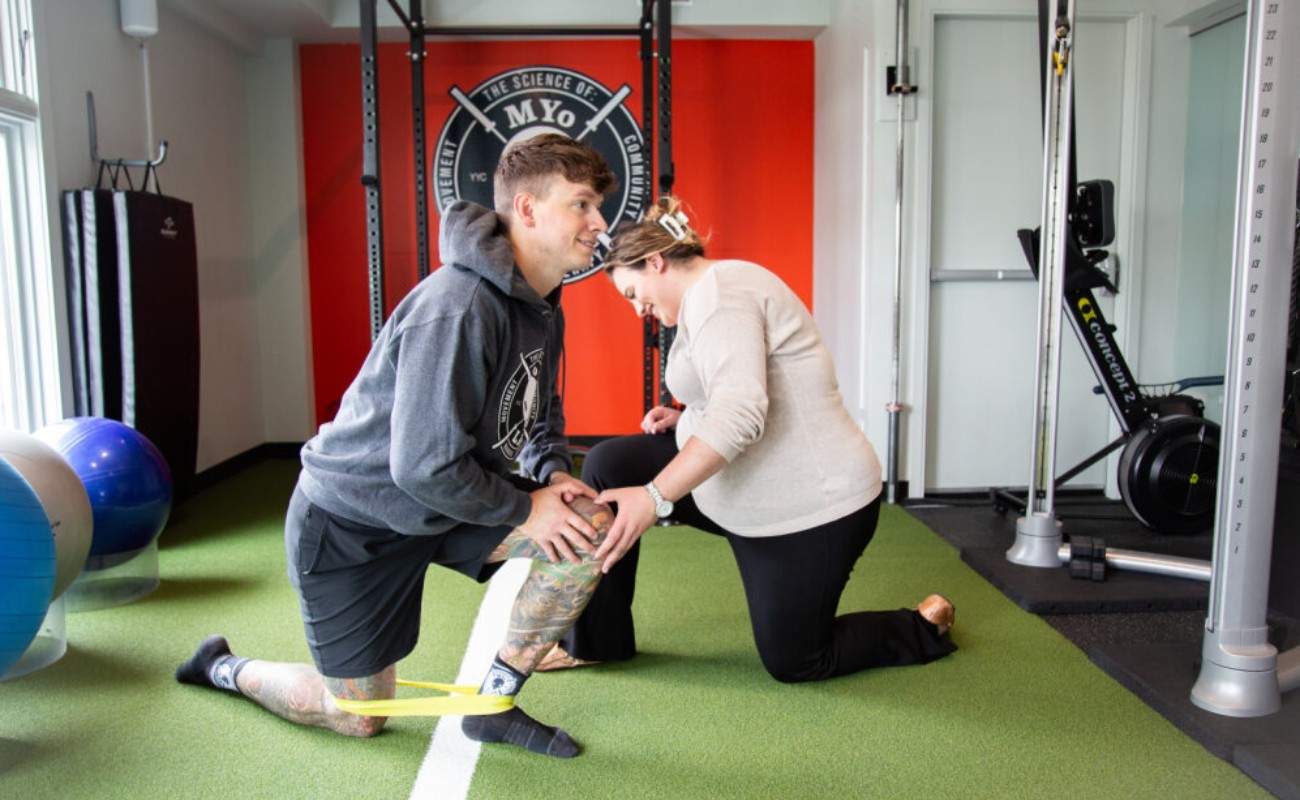
Stability in this context does not mean being rigid. It means having the neuromuscular capacity to maintain joint position under load, particularly through your deep stabilizing muscles, which are the first line of defense for your spine and major joints.
This matters because if your deep stabilizers are not doing their job, your global muscles (the larger, more powerful movers) take over stabilization roles they were not designed for. The result is inefficient movement, accelerated fatigue, and a system that is prone to flare-ups.
The stabilization phase uses low-load, high-control exercises designed to re-engage these deep systems. Isometric holds, controlled range of motion work, and proprioceptive training are central to this phase. The emphasis is on quality of movement over quantity of load.
At MYo Lab, this is where the work becomes yours to own. The exercises assigned in this phase need to be done consistently between visits. Home exercises are what retrain your nervous system and build the stability that holds corrections.
Pillar Three: Strengthen

The final pillar is where durability is built.
Once you have mobility and stability, progressive loading is what trains your tissues to handle the demands of your actual life.
Progressive resistance training increases tendon stiffness, improves motor unit recruitment, and builds the load tolerance that prevents re-injury (Beyer et al., 2015). It also has well-documented effects on pain modulation; strength training has been shown to reduce central sensitization (hyperactivity) and improve pain thresholds in populations with chronic musculoskeletal conditions (Rio et al., 2015).
This phase is not about aesthetics or sport performance, though those are often happy byproducts. It is about building a body that is resilient enough to absorb and manage the loads of daily living, work, and recreation without breaking down.
At MYo Lab, the strengthening phase is individualized to your goals, whether that means returning to recreational sport, managing a physically demanding job, or simply being able to move through your day without limitation. Load is progressed systematically, and reassessment is built in at regular intervals to ensure your program is evolving with you.
Why the Order Matters
Your nervous system needs mobility before it can recruit stabilizers effectively. Your stabilizers need to be online before progressive loading is safe and productive. Loading a system that hasn’t been prepared is one of the most common reasons rehab fails and pain returns (Cook et al., 2010).
The research on this is consistent. A phased approach to rehabilitation, progressing from mobility restoration through stability training to functional strengthening, produces better long-term outcomes than unstructured or symptom-driven exercise (Lederman, 2010).
At MYo Lab, this three-phase structure is the foundation of every exercise rehabilitation plan we build for our patients. It’s also integrated with the broader clinical team, meaning your rehab plan is coordinated with any chiropractic care or massage therapy you may be receiving, so every intervention is working toward the same goal at the right time.
Building a Body That Can Handle Life Again
If you’re ready to move through all three pillars with a structured, evidence-based plan, we can assess where you are and build a program that gets you to where you want to be.
Book an appointment with Dr. Rahul Yadav, a movement-based clinician with a strong athletic background whose approach lies in exercise rehabilitation and performance-focused care.
You can also call us at (403) 930-8686 or email us at info@myolab.ca for additional information.
We’re conveniently located 5 minutes from Sunnyside C-Train with complimentary parking.
Written & fact-checked by Dr. Rahul Yadav, DC MSc.
 Related Articles