 Hypermobility & Your Jaw: Why It Clicks, Locks, and Won’t Stop Aching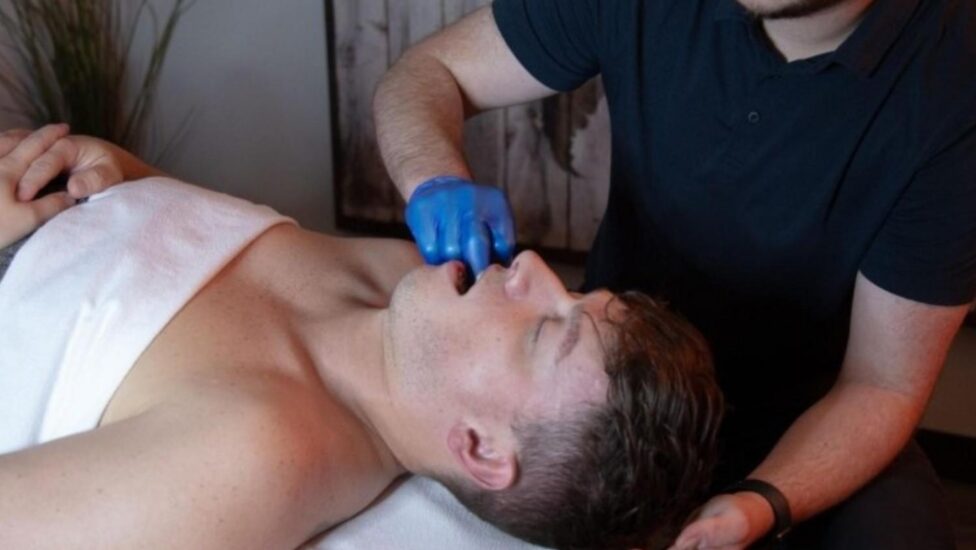
Most people don’t think of the jaw as a joint that’s affected by hypermobility. But the temporomandibular joint (TMJ) is one of the most used joints in your body, and if your connective tissue is more lax than average, your jaw is going to feel it.
We see this regularly: someone comes in for neck tension or headaches, and along the way mentions that their jaw clicks, gets tired from chewing, or their dentist said they’ve been grinding. They’ve never connected it to the same hypermobility that’s contributing to their other symptoms.
Once they do, a lot of things start to make sense.
Why does hypermobility affect the jaw?
The TMJ relies on a balance between the joint capsule, ligaments, a small cartilage disc, and the muscles that control jaw movement. In hypermobility, those ligaments and the joint capsule can’t hold the jaw in position the way they’re designed to.
The result is a joint that moves too much, too easily.
The disc can shift out of place (that’s often what the clicking is). The jaw can slide forward past its normal endpoint. And in some cases, it can get stuck open, which is called an open lock.
This is also seen in the research. A 2024 cross-sectional study of 1,249 young adults found a significant association between generalized joint hypermobility and TMJ clicking. And research published in the Journal of Oral & Facial Pain and Headache found that over 70% of individuals with generalized hypermobility were symptomatic for temporomandibular disorders.
What does hypermobility-related jaw pain feel like?
It doesn’t always show up as sharp pain. Often, it’s more subtle, like:
Jaw fatigue after meals, especially anything that requires a lot of chewing. Think steak, crusty bread, gum. Your jaw muscles are doing two jobs – chewing, but also working overtime to stabilize a joint that’s moving more than it should.
Clicking or popping that comes and goes. Some days it’s loud and constant; other days it’s silent. The inconsistency is actually a hallmark of hypermobile TMJ issues, because the disc position shifts depending on muscle tension and fatigue.
Aching through the temples, cheeks, or in front of the ears. The temporalis and masseter muscles (the main chewing muscles) often tighten up to compensate for the joint laxity. That tension can refer pain across the side of the head and into the neck.
Clenching or grinding, especially at night. In hypermobility, clenching often works the same way as the muscle tightness pattern we see elsewhere in the body: the muscles are gripping because the joint doesn’t have enough passive stability.
What can you do about a hypermobile jaw?
The same principles that help with hypermobility elsewhere apply here: build awareness, build control and strength, and avoid pushing the joint to its end range.
1. Check your resting jaw position:
Your teeth shouldn’t be touching when your jaw is at rest. Lips together, teeth slightly apart, tongue resting gently on the roof of your mouth. If you notice your jaw clenched throughout the day, that’s your muscles trying to do the ligaments’ job.
2. Avoid extreme opening:
Wide yawns, biting into oversized food, and long dental appointments with your mouth held open can all push the TMJ past its control zone. At the dentist, consider asking for a bite block and regular rest breaks.
3. Give your jaw muscles some attention:
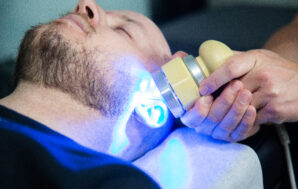
Gentle self-massage through the cheeks and along the jawline can help reduce the compensatory tension. Massage therapy that includes intraoral or jaw-focused work can also be helpful for managing muscle tension in this area.
4. Track what makes it worse:
Sustained chewing, prolonged talking, sleeping on your stomach with your jaw compressed. Identifying your triggers helps you manage flares before they escalate.
When should you get your jaw assessed?
If your jaw clicks daily, locks open or closed, aches after eating, or you’re waking up with facial soreness, it’s worth having a musculoskeletal assessment. Especially if you already know you’re hypermobile, your jaw is likely part of the bigger picture.
At MYo Lab, our chiropractic assessment looks at jaw range of motion, joint sounds and tracking, muscle tension through the jaw, head, and neck, and how your TMJ fits into your overall musculoskeletal picture.
Book your chiropractic appointment with us. We’re conveniently located 5 minutes from Sunnyside C-Train with complimentary parking.
You can:
- Call: (403) 930-8686
- Email: info@myolab.ca
- Visit: 227 10 St NW, Suite 300, Calgary, AB
Written & fact-checked by Dr. Chantelle Green
 Related Articles