
 Why Movement is Medicine for Chronic Pain
In our experience working with patients dealing with chronic pain, we see two patterns more than any other: The first is fear; people who have been told to rest, avoid activity, or protect the painful area for so long that movement itself has become the enemy.
The second is almost the opposite: people who feel they’re managing fine, but when you dig deeper, they have quietly stopped doing the things they used to love, or have let their physical activity slowly fade to a fraction of what it once was.
Both patterns share the same problem.
The focus has shifted entirely to symptoms and away from function. And while reducing pain absolutely matters, chasing zero symptoms as the only goal is one of the most common reasons chronic pain persists.
What actually drives long-term results is changing how you move, rebuilding capacity, and consistently providing your nervous system with the right inputs over time.
What Do We Mean By “Chronic Pain”?
Chronic pain is generally defined as pain persisting beyond three months, or beyond the expected healing time of an injury (Treede et al., 2015). But that definition only tells part of the story.
What the research has made increasingly clear is that chronic pain is not simply a tissue problem. It’s a nervous system problem.
Over time, the central nervous system can become sensitized, meaning it begins to amplify pain signals even in the absence of ongoing tissue damage (Woolf, 2011). This is called central sensitization, and it explains why chronic pain often feels disproportionate to what imaging or physical findings show.
This matters because it changes what the solution looks like. If the nervous system is the driver, then passive treatments aimed only at the painful tissue will always fall short. The nervous system needs input, and movement is one of the most powerful inputs we have.
Why Resting Isn’t the Solution
This goes against what most people are told, but the evidence is consistent: prolonged rest and activity avoidance make chronic pain worse, not better (Booth et al., 2012).
When you avoid movement, several things happen:
- Muscles weaken and lose their capacity to support and load joints properly.
- Connective tissues become less resilient.
- And critically, the nervous system becomes more sensitized because it’s no longer receiving the normal movement signals it needs to calibrate pain responses accurately (Moseley & Butler, 2015).
This is the cycle we see clinically. Someone has pain; they rest; the tissues decondition; the nervous system becomes more reactive; and now even small amounts of activity produce a disproportionate pain response. The original injury may have long since healed, but the nervous system is still sounding the alarm.
Breaking that cycle requires movement, not more rest.
What the Research Says About Exercise and Chronic Pain
The evidence for exercise as a primary treatment for chronic pain is substantial and consistent across multiple conditions.
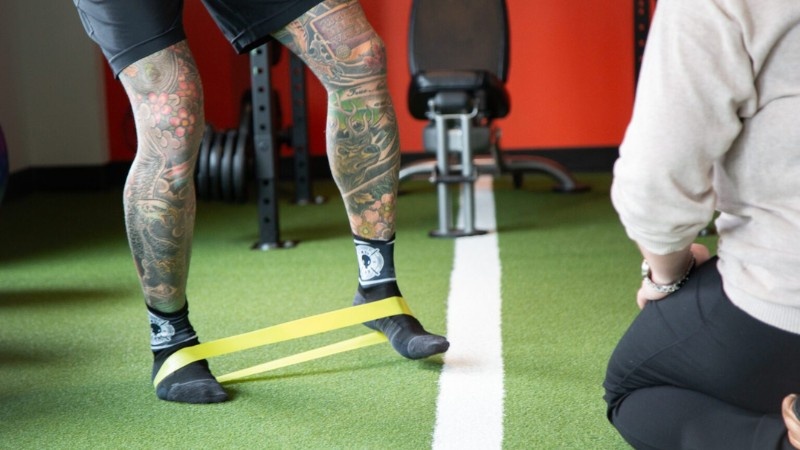
One study examined the effect of physical activity and exercise on chronic pain in adults and found that exercise significantly improved pain intensity, physical function, and quality of life compared to control conditions. Importantly, no single exercise type was found to be superior, meaning the best program is the one that is appropriate, progressive, and actually gets done.
For chronic low back pain specifically, exercise has been shown to be one of the most effective interventions available, outperforming passive treatments including medication for long-term outcomes (Foster et al., 2018). For conditions like osteoarthritis, fibromyalgia, and chronic neck pain, similar findings exist across the literature.
Exercise works through multiple pathways, including reduction of central sensitization, improvement in descending pain inhibition, restoration of normal movement patterns, and improvements in sleep, mood, and self-efficacy (Naugle et al., 2012).
The Role of Education in Recovery
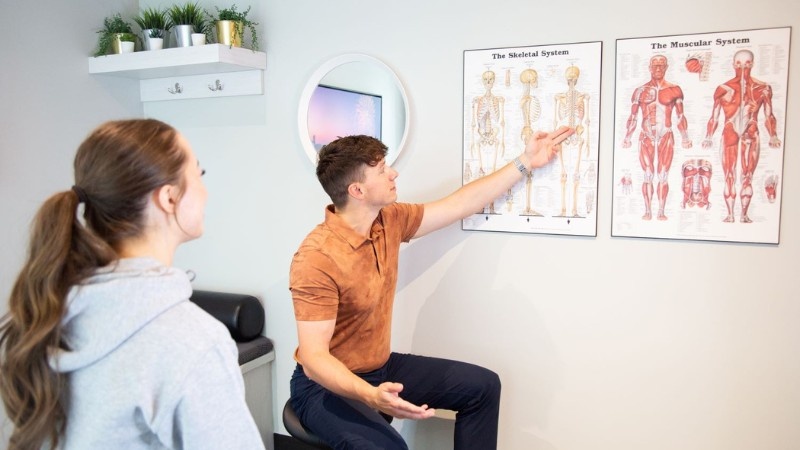
One thing we see time and time again is that understanding pain can actually help people manage it better. Research shows that when people learn how chronic pain works and combine that knowledge with exercise, they often experience less pain, move more confidently, and become less fearful of activity (Louw et al., 2016). It shifts the narrative from “my body is damaged and fragile” to “my nervous system is sensitive and trainable.”
This is a conversation we have with almost every chronic pain patient we work with, because understanding why pain persists is often what gives people the confidence to move again.
What This Looks Like at MYo Lab
Chronic pain presents differently in every person, which is why a generic program will always fall short.
At MYo Lab, our approach follows the same three-phase structure across all rehab plans: release, stabilize, and strengthen, applied at a pace that matches where your nervous system and tissues actually are.
This is coordinated with our broader clinical team, where chiropractic care and massage therapy support the early phases by restoring mobility and reducing tissue sensitivity so exercise becomes more accessible and productive.
The Path Forward Starts with Movement

If you’ve been managing chronic pain without a clear plan, a structured exercise rehabilitation assessment is the right next step. A thorough evaluation of how you move, what your system can tolerate, and a progressive plan built around getting you back to the activities chronic pain has been taking away.
If you’re ready to stop managing your pain and start changing it, we can assess where you are and build a plan that meets you there.
Book an appointment with Dr. Rahul Yadav, a movement-based clinician with a strong athletic background whose approach lies in exercise rehabilitation and performance-focused care.
You can also call us at (403) 930-8686 or email us at info@myolab.ca for additional information.
We’re conveniently located 5 minutes from Sunnyside C-Train with complimentary parking.
Written & fact-checked by Dr. Rahul Yadav, DC MSc.
 Related Articles