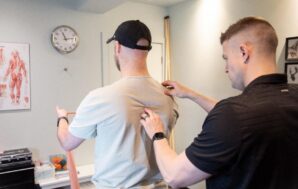
 Dry Needling for Muscle Tightness and Trigger Points: What You Need to Know

If you’ve got a knot in your shoulder or neck that just won’t quit (you know, the kind that shrugs off stretching, foam rolling, and even a solid massage), you’ve probably wondered whether dry needling is worth a shot.
So let me give you the straight version.
I use dry needling in practice, and I’ve also had it done on my own upper traps, which got wrecked over years of studying and started nagging me at the gym.
Here’s the honest takeaway from both chairs: it’s a useful tool, for sure. It didn’t replace the massage and stretching I was already doing, but it worked alongside them, reaching the stubborn trigger points those methods couldn’t quite get to. For some people that’s a real difference-maker. For others it’s a minor add-on, or not the right call at all.
This article is the honest picture: what dry needling actually does, who it tends to help, who it doesn’t, and how to tell whether it’s worth trying.
What Is Dry Needling?
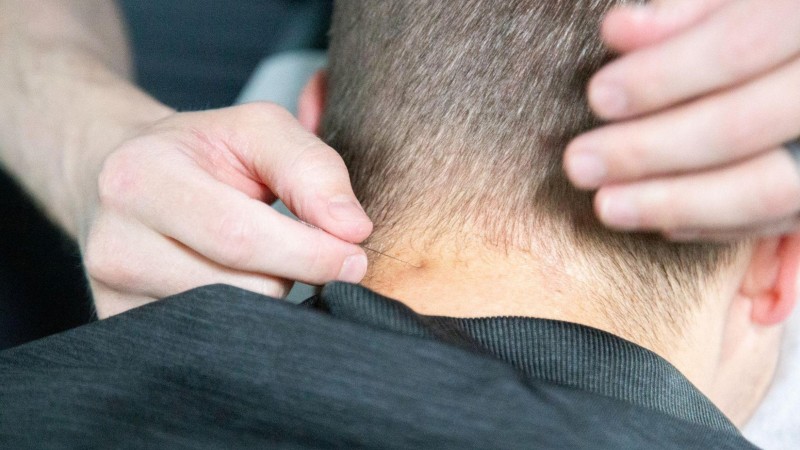
Dry needling is a technique that uses a thin needle (the same type used in acupuncture, inserted directly into a muscle trigger point). There’s no medication involved. The needle itself is the treatment.
It is called “dry” needling because nothing is injected. The goal is to produce a local twitch response in the muscle, which is a brief involuntary contraction that signals the trigger point is being disrupted (Dommerholt, 2011).
It’s worth clarifying the difference between dry needling and acupuncture. Acupuncture is rooted in traditional Chinese medicine and works along energy meridians. Dry needling is based on Western anatomy and neuroscience, targeting specific muscles and trigger points based on your clinical presentation. Different philosophy, different application, similar tool.
What Is a Trigger Point?
I’ve been talking about trigger points for a while. So, what do I actually mean?
A trigger point is a hyperirritable spot within a taut band of muscle tissue. When pressed, it produces local tenderness and often refers pain to another area of the body (Simons et al., 1999).
Trigger points can develop from:
- Repetitive strain or overuse
- Poor posture sustained over long periods
- Acute injury or trauma
- Psychological stress and chronic muscle guarding
They’re not just “tight muscles.” They represent a localized area of altered muscle chemistry, reduced blood flow, and heightened nervous system sensitivity (Shah et al., 2008). That’s why stretching alone often does not resolve them; you can lengthen the surrounding muscle without ever addressing the trigger point itself.
How Does Dry Needling Actually Work?
When a needle is inserted into a trigger point, a few things happen:
- The local twitch response disrupts the dysfunctional motor end plate activity driving the trigger point (Hong, 1994)
- Blood flow to the area increases, flushing out the sensitizing chemicals that accumulate in trigger points (Shah et al., 2008)
- The nervous system receives a strong input that can reduce local and referred pain
- Muscle tone in the affected area decreases, improving range of motion
The result is not just temporary relief. When dry needling is combined with exercise and movement retraining, it creates a window where the tissue is more receptive to loading and change. That’s where the real, lasting benefit comes from.
What Does the Research Say?
The evidence for dry needling in the management of myofascial trigger points is well supported.
A systematic review by Hu et al. (2021) found that dry needling significantly reduced pain intensity and improved pressure pain threshold in patients with myofascial pain syndrome compared to sham and control conditions.
A separate review by Liu et al. (2018) found that dry needling produced meaningful short-term improvements in pain and function for patients with chronic neck pain, a finding highly relevant for anyone dealing with upper trap tightness or desk-related tension.
For chronic low back pain, Tough et al. (2009) found that dry needling produced clinically meaningful reductions in pain when used as part of a broader treatment approach.
The key phrase there is “part of a broader treatment approach”. Dry needling works best when it’s integrated with exercise rehabilitation and chiropractic treatment, not always in isolation.
Is Dry Needling Painful?
This is the question most people ask first.
The needle itself is very thin, much thinner than a standard injection needle. You may not feel the insertion at all. What most people do feel is the local twitch response, which can produce a brief cramping or aching sensation in the muscle. It’s intense for a second or two, and then it passes.
Most patients describe the post-treatment sensation as similar to a deep muscle soreness that lasts 24 to 48 hours. This is normal and expected. It’s a sign the tissue has been stimulated and is responding (Dommerholt & Fernández-de-las-Peñas, 2013).
In my own experience, that soreness after my first session was significant, but so was the difference in how my upper traps felt within a few days. The chronic tension I had been carrying for years started to ease in a way that stretching had never achieved on its own.
Who Is a Good Candidate for Dry Needling?
Dry needling may be appropriate if you’re dealing with:
- Chronic muscle tightness that does not resolve with stretching or massage
- Referred pain patterns, for example, upper trap tightness that causes headaches
- Movement limitations driven by muscle guarding
- Recurring muscle pain linked to posture or repetitive strain
- Performance limitations related to muscle tension rather than structural injury
It’s not appropriate for everyone. Certain medical conditions, medications, and presentations require modification or mean dry needling is not the right fit. A thorough assessment always comes first.
How Does It Fit Into a Rehab Plan at MYo Lab?
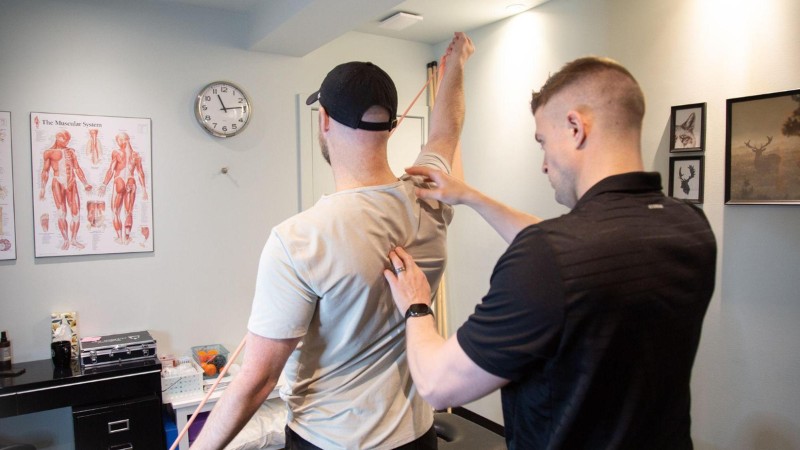
At MYo Lab, dry needling is not a standalone treatment. It’s one tool within a broader exercise rehabilitation plan.
Think of it this way: If a muscle is locked in a chronic trigger point state, it cannot be loaded or trained effectively. Dry needling releases that barrier. From there, exercise rehabilitation builds the strength and motor control needed to keep it from coming back. Chiropractic care addresses any joint restrictions contributing to the muscle guarding, and massage therapy supports tissue quality throughout the process.
That is the integrated approach. Each tool does what it does best, coordinated toward the same outcome.
For me personally, dry needling combined with targeted upper trap and scapular strengthening was what finally broke the cycle I had been stuck in. It was not one or the other; it was both, in the right order.
Ready to Find Out If Dry Needling Is Right for You?
If you’ve been dealing with stubborn muscle tightness, trigger points, or referred pain that has not responded to other approaches, a thorough assessment is the right starting point. We’ll identify what’s driving the issue and whether dry needling fits into your plan.
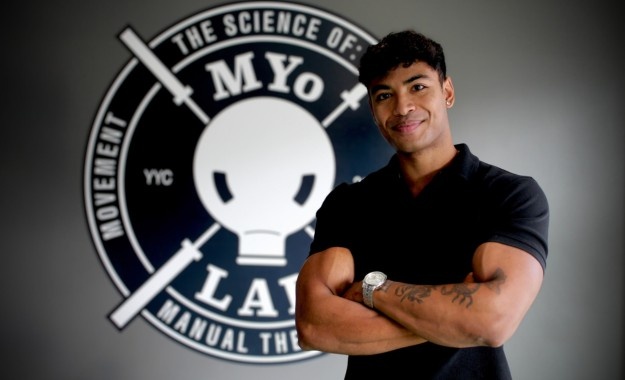
Book an appointment with Dr. Rahul Yadav, a movement-based clinician with a strong athletic background whose approach lies in exercise rehabilitation and performance-focused care.
You can also call us at (403) 930-8686 or email us at info@myolab.ca for additional information.
We’re conveniently located 5 minutes from Sunnyside C-Train with complimentary parking.
Written & fact-checked by Dr. Rahul Yadav, DC, MSc.
 Related Articles