 Hypermobility & Your Feet: Why Your Base of Support Keeps Giving Out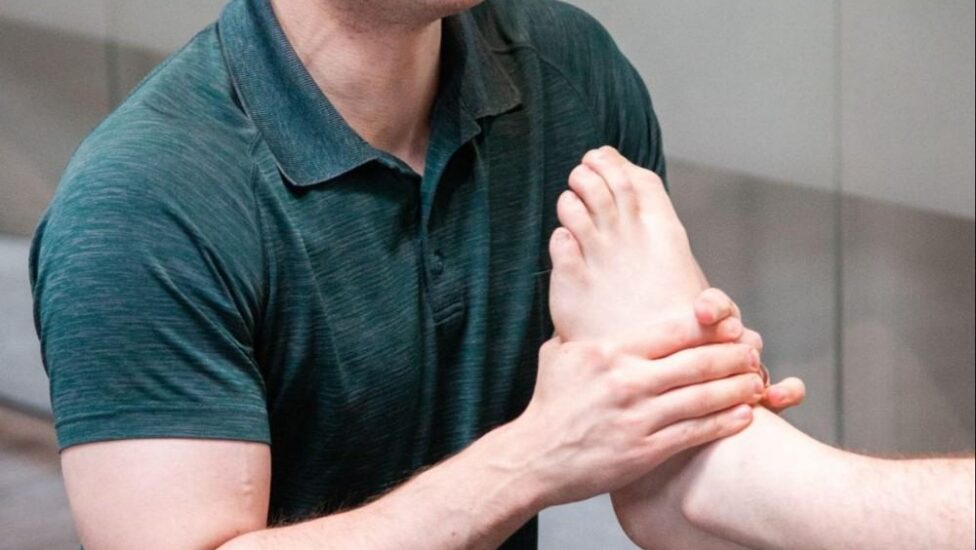
If you’re hypermobile, there’s a good chance your feet are too, and that they’re creating problems elsewhere.
We see this pattern constantly: someone comes in for knee pain, hip stiffness, or low back pain that flares up with walking.
We look at their feet, and the arches are collapsing the moment they stand up.
Their ankles roll in, and they’ve found some way of compensating when they walk.
Why do hypermobile people have flat feet?
When your connective tissue is more lax than average, the ligaments that normally hold your arch up don’t maintain the tension they’re supposed to. The arch drops, the ankle rolls inward, and the foot overpronates, and we start using our feet differently when we walk.
Your foot is supposed to work like a tripod, with weight balanced across three points: the heel, the base of the big toe, and the base of the little toe. The ankle is supposed to sit on top of a stable foot, and when the arch collapses, the foot can’t stabilize, and everything above it has to compensate.
That’s how a foot issue turns into knee pain, hip stiffness, or a low back that won’t recover.
What does this actually feel like day to day?
People often don’t describe it as “my arches are collapsing.”
They tell us that they have:
Aching feet after being on them all day, especially through the arch or heel. This is common with plantar fasciitis, which can show up in hypermobile feet because the arch can’t support the body the way it should, and it overloads the plantar fascia.
Ankles that roll constantly. Not only on uneven ground, but on flat sidewalks, stepping off a curb, or even just standing still too long. Every time your ankle rolls like this, it’s a sprain.
Knee pain or hip pain that doesn’t respond to knee or hip treatment. If the foot is the driver, treating only the area that hurts won’t resolve the pattern. It might get better, but it doesn’t fully go away.
Can you actually strengthen a hypermobile foot?
Yes, and it matters a lot.
Your ligaments may always be loose, but the small muscles inside your foot (the intrinsic foot muscles) are supposed to do a lot of the stabilizing work to help the lax connective tissue, and they can get stronger.
- Start with the short foot exercise. This involves gently “doming” your arch by drawing the ball of your foot toward your heel without curling your toes. It targets the deep foot muscles that support the arch, and it often works better than a traditional towel scrunching exercise.
- Build tripod awareness. Before you add load, you need to know where your foot is contacting the ground. Practice noticing whether your weight sits across all three points (heel, big toe base, little toe base) or dumps inward toward the arch when you’re standing.
- Progress to single-leg balance work. Eyes open first, then eyes closed, then on an unstable surface. This builds the proprioception and coordination your feet need to respond in real time.
- Consider whether orthotics could help. Custom orthotics can give your foot a stable base while you build strength, similar to how a brace supports a joint during rehab. Depending on your situation, it may be a short-term solution, or it may be a support that you need all the time.
How do you know if your feet are part of the problem?

If you’re hypermobile and dealing with recurring lower body pain that doesn’t seem to resolve, it’s worth having your feet and gait assessed. Often, the feet are the piece that’s been overlooked.
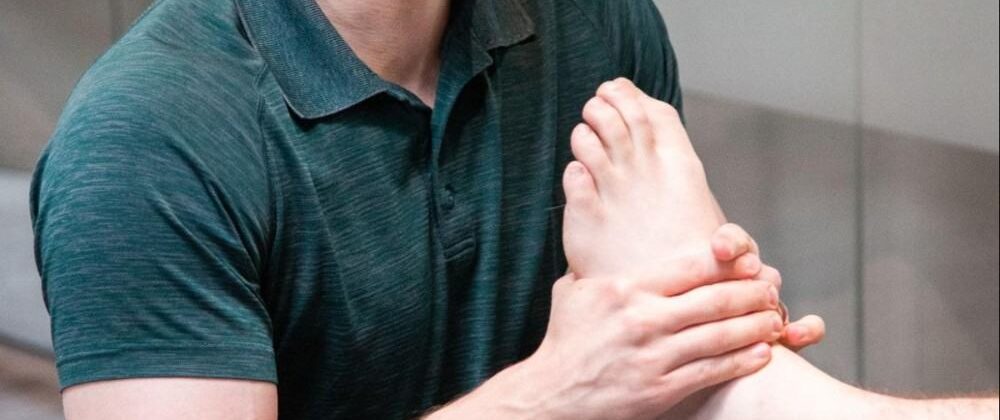
At MYo Lab, our Chiropractic assessment and treatment includes foot posture and arch screening, gait analysis, joint control testing through the ankle and foot, and a plan that connects what’s happening at your feet to what you’re feeling further up the chain.
You can:
- Call: (403) 930-8686
- Email: info@myolab.ca or
- Visit: 227 10 St NW, Suite 300, Calgary, AB
- Book your chiropractic appointment with us. We’re conveniently located 5 minutes from Sunnyside C-Train with complimentary parking.
Written & fact-checked by Dr. Chantelle Green
Related posts:
- Are Your Feet in Pain? Discover If You Need Custom Orthotics
- Why Strength Matters More Than Stretching for Hypermobility
- Hypermobility & Muscle Tightness
- Hypermobility & Persistent Pain
 Related Articles